Thursday, March 19, 2009

Landscape with Two Saints: Upcoming Book Release

Landscape with Two Saints: How Genovefa of Paris and Brigit of Kildare Built Christianity in Barbarian Europe by Lisa M. Bitel


ISBN13: 9780195336528ISBN10: 0195336526 hardback, 320 pages; 15 halftones, 11 line illus.;
Apr 2009, Not Yet Published, Oxford University Press
$34.95 (01)


At a time when Europeans
still longed to be Roman and were just learning to be Christian, two extraordinary holy women-Genovefa of Paris (ca. 420-502) and Brigit of Kildare (ca. 450-524)-began to roam their homelands. One of these saints raised an apostolic church in the imperial city that would become Paris. The other scavenged fragments of that dwindling empire for the foundations of a grand Roman basilica built deep in barbarian territory. Both brought Christianity and romanitas (Roman-ness) to their people. By examining the ruins of their cities and churches, the workings of their cults, and the many generations of their devotees, Lisa Bitel shows how Brigit and Genovefa helped northern Europeans map new religion onto familiar landscapes. Landscape with Two Saints tells the twin stories of these charismatic women but also explains how ordinary people lived through religious change at the very beginning of the Middle Ages.

Tales of ancient conversions on distant landscapes have much to teach us about lived and built religion, why people choose new beliefs, and how they act out those beliefs in meaningful ways. The combined history of Brigit and Genovefa explains not just how a couple of legendary peripatetic women could become targets of devotion, but how and where Europeans became Christian, and what it meant to them on a daily basis. The story of these two saintly cults-not just in the pages of manuscripts, but on the streets of cities, in the stones of cemeteries, and in the walls of churches-also demonstrates the pervasive influence of gender and ethnicity, as well as regional culture and material environment, on the whole process of religious change. Bitel contends that in the building blocks of their churches and the tracks they once traveled, Genovefa and Brigit show us what the written words of missionaries and theologians never can: the active participation of converts in the history of their own conversion.


Reviews

"Lisa Bitel's most recent book offers a fascinating window into two disparate late fifth-century landscapes: the first, Paris during the Hunnic invasions, and the second, rural Ireland following the conversions. ....Bitel's treatment of two highly enigmatic women makes a decisive contribution to our understanding of late antique and early medieval gender, hagiography, and religious history."
--Bonnie Effros, professor of history at Binghamton University (SUNY), author of Caring for Body and Soul: Burial and the Afterlife in the Merovingian World, Creating Community with Food and Drink in Merovingian Gaul , and Merovingian Mortuary Archaeology and the Making of the Early Middle Ages
"Lisa Bitel's Landscape with Two Saints is a wonderful book-scholarly, yet fascinating for anyone interested in the development of Christianity in the early Middle Ages. Bitel skillfully brings to life the world of Genovefa of Paris and Brigit of Kildare to highlight the often-neglected role of women in the medieval Church of western Europe."
--Philip Freeman, Orlando W. Qualley Chair of Classical Languages at Luther College and author of St. Patrick of Ireland
"This is a wonderful book - fascinating, provocative, and erudite. Utilizing a variety of sources, Bitel provides a detailed comparative study of the worlds of Saints Genovefa and Brigit and their remarkable accomplishments in the building of a new Christian society. No one knows these early sources better than Bitel who has been deeply involved in this research for many years. This will become a classic study of these important figures and the landscapes of Paris and Ireland during this formative period of early Christianization."
--Jane Tibbetts Schulenburg, Professor of History, Department of Liberal Studies and the Arts, University of Wisconsin-Madison, author of Forgetful of Their Sex: Female Sanctity and Society, ca. 500-1100


About the Author

Lisa Bitel is Professor of History, Religion, and Gender Studies at the University of Southern California.
from the website of Oxford University Press, USA.

Wednesday, March 18, 2009

Gracious Bride, a Blessing by A Hedge of Trees

January 25, 2009

Gracious Bride


Gracious Bride
Bless this my intent
bring it to birth on the Earthly plane
So mote it be, and blessed.

I pinch this candle of fire, your gift
may it burn more brightly in the realm of spirit
Continuing to fire my boon, for my good
and the good of all
'An it harm none, so mote it be

Brighid's Kiss: Triniti (Video on You Tube)

Beautiful song and video! I am trying to download it so I can share it here directly, but in the meantime, the url is this:

http://www.youtube.com/watch?v=AhNEzKxRBis


A Hedge of Trees posted these words to Brigit's Altar, 15 January 2009:

A version of Eithne and Padraig Ni hUallachain's "Brighid's Kiss is now on U tube together with beautiful images, mostly from Kildare.

In our Brigit celebrations we have used this track as Brigit enters the assembly, and it has been very powerful.

Here are the words of the original old Irish song, together with their additons.

13. BRIGHID'S KISS

1. Gabhaim Molta Bride…

Ionmhain í le hÉireann,

Ionmhain le gach tír í

Molaimis go léir í

Translation: Not sung

I praise Brighid

Beloved of Ireland

Beloved of all lands

We all praise her


2. Lóchrann geal na Laighneach

'Soilsiú feadh na tire

Ceann ar óghaibh Éireann

Ceann na mban ar míne.

Bright torch of Leinster

Shining throughout the land

Irish women cherish her

As do all fine women.


3. Tig an gheimhreadh dian dubh

Gearradh lena ghéire,

Ach ar Lá 'le Bríde

Gar dúinn Earrach Éireann

The harsh dark Winter comes

Cutting with its sharpness

But on Brighid's Day

Ireland's Spring is near.


4. Brighid of the sunrise, rising in the morning,

Rising with the Springtime, Greening all the land,

6.. You the red-eared white cow, Nourishing the people,

Nourish now the hunger, Souls' longing in our land.


5. See you in the soft cloud, See you in the raindrop,

See you in the winds of change, Blowing through the land.

7. Bird that is unfolding,

Now the time's upon us,

Only have we eyes to see, Your Epiphany.

Repeat first verse

Gabhaim Molta Bride…


A Hedge of Trees

http://intothegreenwood.blogspot.com/


American Academy of Religion


The American Academy of Religion has nothing directly to do with Brigit. What it has to do with is promoting understanding and tolerance between religions, and as such, has everything to do with her. Both the Goddess Brigit and Saint Brighid have reconciliation and caring in their toolkits, and both the religions of the Goddess and Christianity are capable of, and in need of, extending tolerance and understanding.

From their website:

Mission Statement

The following Mission Statement, Goals, and Strategic Objectives were adopted by the AAR Board of Directors in November 1995.

In a world where religion plays so central a role in social, political, and economic events, as well as in the lives of communities and individuals, there is a critical need for ongoing reflection upon and understanding of religious traditions, issues, questions, and values. The American Academy of Religion's mission is to promote such reflection through excellence in scholarship and teaching in the field of religion.

As a learned society and professional association of teachers and research scholars, the American Academy of Religion has over 8,000 members who teach in some 1,500 colleges, universities, seminaries, and schools in North America and abroad. The Academy is dedicated to furthering knowledge of religion and religious institutions in all their forms and manifestations. This is accomplished through Academy-wide and regional conferences and meetings, publications, programs, and membership services.

Within a context of free inquiry and critical examination, the Academy welcomes all disciplined reflection on religion--both from within and outside of communities of belief and practice--and seeks to enhance its broad public understanding.


"Consort with them in kindness, for if ye hate them it may happen that ye hate a thing wherein Allah hath placed much good." (An-Nisa': 19)

Prism Image with Brigit


Joan Lansberry arranged and photographed this beautiful image of Brigit for her multi-layered website.

Lovely work, Joan.


Saturday, January 31, 2009

Blessings of Imbolc!


Brigit, you come to this world as an infant, the green newness of spring, the birth of all that nourishes us.

Welcome to my home, welcome! The door is open to you and your blessings.

Protect us, Brigit, temper us, heal and inspire. Accept our gifts, and lead us to our brightest courage, our highest aspirations, our greatest generosity.

I light your flame and share and protect it. I bring its warmth and meaning into me, and bring its warmth and meaning to the world.

Thank you for your gifts.

May the mantle of Brigit surround and protect us.

Blessings always.

Mael Brigde

Tuesday, September 09, 2008

Modern Brigit Paintings


The art of M. Hunter-Hoffman is distinctive and often disturbing. Her series of 6 Bridget paintings can be found at:

http://www.mhunterhoffman.ca/Collection5.htm

Hunter-Hoffman was born in Belfast, Ireland, moved in time to England, and from there to Canada.

Thursday, June 26, 2008

Brigit Art on the Web--an Old Favourite


Brigid's Cloak, by Barrie Maguire


A
s the story is told, St. Brigid went to the King of Leinster to tell him she needed land upon which to build a convent.

"You do, do you?" replied the king. "How much do you need?"

"We need only the land my cloak will cover - no more", answered Brigid.

"Well if that's all!" said the amused king, "You shall have it. That can be settled easily."

On hearing that, Brigid removed her cloak and laid it on the ground. Then to the absolute amazement and astonishment of everyone watching, the cloak began to grow. It grew and grew. It stretched all round at once, stretching itself out and rapidly gaining speed. Startled the king jumped back. The cloak was like a living thing.

Finally it stopped. Brigid looked around her. In every direction her cloak stretched. It covered acre upon acre of rich, green, pastureland. With twinkling eyes she said, "Thanks be to God."

"And thanks be to me," said the king. "Make good use of it."

Brigit Art on the Web #1


"'Bridget' - Nature Goddess"

Alan Reed
(Visit Gallery)

I think living in S.W. Scotland influenced me to paint this work. Around where I live, in a coastal village in the Machars region, there is much evidence of neolithic habitation, with fortified villages, stone circles, burial mounds and standing stones. This is a very spiritual land. Indeed, the whole area is steeped in ancient history from the Romans through to the Vikings and the early Christians.

website:

Brigit Art on the Web #2

"Brigit, Goddess of Inspiration"
Kris Waldherr
(Visit Gallery)
Medium: Pencil
Posted: 2004-06-27
"This drawing was originally published in my book, "Embracing the Goddess Within."

artist's website:
Art and Words

Brigit Art on the Web #3


Media: Watercolor
Dimensions: 9x12
Date of Work: 2005

Brid, the great mother goddess of Ireland, represents fertility, childbirth, power, creativity and inspiration. Also known as Brighid, Brigit and Bride, she is credited as a protectress and guardian of children; also a Goddess of fire, the sun, music and medicine.

Louise M. Scott is an award winning writer and artist. Her poetry has been published in collective work books and has won many awards in the fantasy and wiccan communities. Her paintings and prints are currently in public and private collections worldwide. Born in Glasgow Scotland she now works from her studio in Canada where she lives with her husband and children. A solitary witch for most of her life,

Louise takes her inspiration from witchcraft and her Celtic background. Her paintings and stories come from legends and folklore of magick and myth.

I have always believed in magic. Ever since I was a little girl. My day dreams are always filled with faeries and other magical creatures. I have been creating stories and images filled with magic and adventure ever since I can remember. I am happy to share these visions with you, welcome to a world filled with enchanting witches, playful faeries and other mystic creatures.

Welcome to the realm of magick and myth.


Artist: Louise M Scott


Ontario, CANADA


Monday, May 12, 2008

Orthodox Christian Brigid Page

a page of Brigid information and links in the Festal Celebrations Gallery. “Let Us, the Faithful, Celebrate a Spiritual Feast”

CD: Medieval Office for St. Brigit: Plainsong Chant

Flame of Ireland: Medieval Irish Plainchant, An Office for St. Brigit, by Canty.

Canty is the female half of Scotland's Capella Nova, a "professional vocal ensemble specialising in early (medieval and renaissance) and contemporary music". C
anty was founded in 1998 by Rebecca Tavener to celebrate the 900th anniversary of Hildegard of Bingen.


from the Capella Nova website:
Our programme mostly consists of material for the Office of Matins for the Feast of St Brigit. Matins was the longest and most 'entertaining' of the Offices including a series of nine lections and responsories focussing on the life and attributes of the saint. The full Office would probably be more than two hours in length, so we present a formal, but truncated, version which includes the original lections, but cuts nine of the ten Psalms which would have been sung. The one remaining Psalm is the Venite which forms a delightful structure with its antiphon (Invitatory), alternately whole or in part, appearing between each verse...

The date of the manuscript might have tempted us to perform this material using late-Medieval techniques such as applied measures and improvised harmonies. We have steadfastly resisted doing this, wishing to present the Office in a much more archaic manner, befitting the great antiquity of the sources of the Brigit legends...

...Manuscript 80, from the library of Trinity College Dublin, is the main source relied upon for this recording. It is a fifteenth-century noted breviary, i.e., one which includes notation for the chant melodies. Although we do not know the details of its provenance, it was compiled probably in the fifteenth century and is believed to have been used in the parish of Kilmoone, Co- Meath, from at least 1470 until 1604...

...The wire-strung clairseach was the essential art Instrument of Medieval Ireland. This ancient harp was characterised by a sound box carved from a single block of timber, a substantial arm reinforced with thick metal bands, a stout forepiltar, and brass wire strings. Played with the fingernails, the strings gave a satisfying sustain, which ancient writers described as sounding like bells. Such harps were played in Ireland at least as early as the 10th century, and they appear to have been used in liturgical settings to provide an intoning pitch for the singing of plainsong, to give instrumental preludes or interludes, and to accompany the performance of devotional poetry. As an accompanist, my role is to support both the tonal centre and the emotion of the music. During the Responsories I provide a gentle line of counter-melody which moves in the same direction as the plainsong, but which also offers a subtle. independent commentary on the text. The Lections give an ideal opportunity to accompany a singer as a Medieval storyteller, to present the miracles of the saint's life in a dramatic way, with moments which range from furious decorative filigree to sections of serene, introspective solemnity...

In the notes about Brigit's legends, they state:

We have one favourite miracle that does not appear in this Office, nor in any of the most ancient sources. It was included in O'Hanlon's 'Lives of the Irish Saints' (1800), however, and we would like to think that it belongs to an earlier tradition. When St Brigit was on a visit to Limerick, she called at a chief's house only to find him away from home. Seeing harps hanging on the walls, she asked the young men of the house to play for her. They explained that there were no harpists present, but attempted to play when Brigit's nuns jokingly suggested that the saint would bless their hands. At that point, they suddenly became able to play like trained musicians. Afterwards they became professional harpists, and their descendants played for the kings of Ireland.
'Almighty and everlasting God, who choosest the weak things of this world that thou mayest overthrow the strong, give us in this feast of St Brigit strength of mind and body, that we may with all our heart run to thee. and serve thee in body always.' (Prayer at the end of the Office for the Feast of St Brigit)
************************************************************************************

BREAKING
NEWS:

Due to the take over of Sanctuary/ASV Gaudeamus by Universal we are unable at the moment to obtain stocks of the following titles. (see right)

This is a temporary situation, so watch this space for updates.
  • The Complete Carver Volumes 1, 2 & 3
  • Columba Most Holy of Saints
  • The Miracles of St Kentigern
  • Laudes Deo
  • Sacred Music for Mary Queen of Scots
  • The Thistle and the Rose
  • Flame of Ireland
  • Felix Femina


  • Thursday, February 28, 2008

    Brighid.org.uk -- A Brigit Site to Treasure


    Brighid Goddess and Saint is a fine site compiled by Paul Williment. On it you will find information on customs, Brigit sites in Ireland, The Isle of Man, Scotland, Wales, and England, books and CDs, links to related sites, and information on both Her goddess and saint aspects.

    It's wonderful stuff, expertly and beautifully constructed, with lots of photographs to fill out the picture of modern Brigit devotion.

    Thank you, Paul!


    "The banner above depicts Brighid against Eilean Bhride in the Hebrides. The scroll honours all those who have preserved Her story throughout the ages. The red hot iron spiral represents the goddess and suggests a crosier as a reminder that St. Bridget was consecrated as a religious using the form of the ordination of a bishop."

    Paul Williment


    Tuesday, February 19, 2008

    The Preserving Shrine of Erynn Laurie


    Anyone interested in Celtic Reconstructionism and many followers of Brigit will enjoy and learn from the thoughtful teachings of Erynn Rowan Laurie, Poet, Fili, and Priestess.

    Erynn's latest book, Ogam: Weaving Word Wisdom, is an excellent resource. Philip Carr-Gomm, Chosen Chief of the Order of Bards, Ovates & Druids, has this to say about the book: "At last. Magic, poetry and scholarship meet in perfect harmony. I will recommend this book to all students of The Order..."

    Though of course her focus in the book is much broader than that of Brigit's Sparkling Flame, among the pieces of information she offers about Brigit is her association with birch, for instance the offering of birch branches to her at Imbolc.

    See her website (The Preserving Shrine) for information on her books, ogam readings, etc., links to CR sites and Erynn's LiveJournal. Stop there, also, for access to these articles:

    from her website:

    The early Irish Brehon law texts ask "What is the preserving shrine? " This question has two answers:

    "The preserving shrine is nature and what is preserved in it."
    "The preserving shrine is memory and what is preserved in it."

    This is the heart of Filidecht: the practice of sacred, ritual poetcraft in early Irish and Scottish tradition. Nature and memory are one in the Fili. The Filidecht of Inis Glas, the personal path Erynn co-founded and practices, is a way of devotional, poetic nature mysticism based in an attempt to reconstruct aspects of early Celtic spiritual practices.

    In early Irish practice, poetry and the word were intrinsic components of magic and the worship of deity. The Filidh additionally taught, practiced divination and ritual, did healing work, sought visions, and pursued many other arts for the people and tribes they served.


    Back to Top

    Daughters of Daghda, a Brigidine Celtic Reconstructionist Site

    excerpted from the site:

    Céad Mile Faílte! One hundred thousand welcomes to my site in honor of the Goddess Brighid! I am a Celtic Reconstructionist Pagan of Irish heritage, which dates back to 1706 in the New World, and that of Eastern Band Mississippi Choctaw. Here I have tried to provide interesting and informative links to sites about Brighid. There are also pages about my devotions and spirituality to Her as a CRP and pictures of my seasonal altars dedicated to Her for offerings and meditation. Of course, my kitties have their own cozy corner as they deserve a special space for themselves. My intense political life demands its own voice on the site as it is also an integral part of my love for and having been claimed by Herself.

    ...
    I began wanting an Order of Flamekeepers where the women to whom I passed Her Flame were on the same CR path as myself. We have begun this project in our CR community under the inspiration of Kathryn Price NicDhana who is sworn to Brighid and a Flametender for many years. If you are a woman who is practicing the CR spirituality or very much interested in doing so and have special devotion to Brighid, please follow this link to our LiveJournal community of Brighidwomen. The Order is in its early formation and will be a collective effort in its foundation stages:
    http://community.livejournal.com/brighidwomen/profile


    Beannachdan!

    S. Breen

    Eurotales: Traditional Stories and Festivals Illustrated by Kids


    Eurotales produces pages for children that tell traditional European stories and other pages that describe festivals. The festivals included range from the Finnish carnival of Vappu, Greek Christmas, English Weddings, and St. Brigit's Feast Day.
    The lively art, done by children, and photos of kids celebrating the Day, or of various components of the particular festival, make the site well worth visiting.
    (For a lovely Irish story, try "The King Who Hated To Have His Hair Cut".)


    Monday, July 23, 2007

    She Receives the Flame from Her Sister

    this morning i was assigning shifts to two Daughters of the Flame who are returning to tending Brigit's flame after a time away.

    i was telling each who was passing the flame to them, and who they would be passing it to, and who was tending the flame in the other two cells at the same time as them. contemplating the beauty of this endless sharing i was moved to write this prayer:

    she receives the flame


    she receives the flame from her sister
    opens her palms
    accepts it
    it lights the planes and curves of her face

    Brigit
    Blessed One
    Grace-Giving Goddess

    she receives the flame from her sister
    it enters her heart
    enters thoughts and eyes
    all is blessed in her regard
    with the flame of Brigit within

    Brigit
    Blessed One
    Grace-Giving Goddess

    she receives the flame from her sister
    they circle the same altar
    continents apart
    the same flame animating them to joyous life

    Brigit
    Blessed One
    Grace-Giving Goddess

    Brigit and Her Sisters sit together
    They share the vat of beer and laughter
    the crucible of creation and insight
    the healing poem sang upon the world's wounds

    Brigit
    Blessed One
    Grace-Giving Goddess

    Their Children receive their manifold blessings
    and receiving give
    the flame that enters is the flame that passes on
    to the next and the next and the next

    Brigit
    Blessed One
    Grace-Giving Goddess

    she receives the flame from her sister
    from their Goddess they receive Her flame
    tend it love it nurture it
    pass it on to the next and the next
    and the next

    mael brigde 2007

    Tuesday, May 01, 2007

    Brigid's Cloaks

    Below find info on Sara Jane Kingston's Brigid's Cloaks and other items related to the cloaks, including art, communities, a children's book... She also has a Brigit meditation CD available: http://www.brigidscloak.com/meditations.html

    Sara Jane Kingston began making Brigid's Cloaks for sale last year after discovering their value as spiritual tools. You can make your own or order one from her, or from the Catholic Brigidine sisters at Solas Bhride in Kildare, Ireland.


    A snippet of her story:


    Brigid's CloakTraditionally, the brat bhríde, or Brigid's Cloak, was laid outside before sunset on the eve of Brigid's feastday, 1st February, and brought back in before sunrise.

    Blessed by Brigid, ancient Spring goddess and saint, the dew which fell that night imbued the cloth with powers of healing and protection which lasted throughout the year.

    Brigid's Cross, now usually associated with the 5th-century Christian saint, was made annually from straw or rushes and hung above the door. In pre-Christian times, it was probably a sun symbol and celebrated the power of the goddess to bring back the light at the Celtic feast of Imbolc. It holds the promise of fertility and abundance...

    ...As a child I had loved the story of how, when St. Brigid went to the King of Leinster looking for some land on which to build a church, he had tried to put her off by saying that he would give her as much land as her cloak would cover. Not to be daunted, Brigid asked four of her nuns to each take a corner of her cloak and as they began to walk, the cloak began to stretch in size until it was large enough to cover a substantial piece of land. The King, true to his promise gave her the land and she built her first church there. This seemingly miraculous power over land of the 5th-century Christian saint in this story holds the resonance of the more ancient Brigid, the great Celtic Land Goddess.

    As I work in healing through the energy field, I used the symbol of Brigid's Cloak as a starting point to allow people to connect into seeing their own "energy cloaks" or auras by imagining that they were wearing a cloak and seeing what it was like. Was it old and frayed, heavy or light? What material was it made of - what sort of texture, or textures? And the colours - were they bright or dark or a mixture?

    Go to Sara Jane's site at http://www.brigidscloak.com/ for more of her story. If you would prefer to make your own Brat Bhride, go wild--the possibilities are endless! Don't forget their use as healing tools. A cloak may be cut into smaller pieces and distributed to those in need of blessings once it has been used in ritual. Or the entire cloth laid over a sick person to aid in her recovery.

    Many other sites refer to Brigid's Cloak.
    • for a simply beautiful painting of Brigid's Cloak as the land of Eire, go to Barrie MacGuire's listing at http://www.maguiregallery.com/barrie/brigidscloak.htm. Barrie is also a quilter, and has included a video of his paintings of quilted Ireland. Go to his homepage to view it. http://www.maguiregallery.com/barrie/barrie.htm
    • "St. Brigid's Cloak" a prayer circle for Christian women flame-keepers, dedicated to keeping the fire of St. Brigid of Ireland burning bright in the world today. Local members in Las Vegas, Nevada have an annual St. Brigid's Food Drive for the Poor in November and December.
    • "Brigid's Cloak", a children's book by Bryce Milligan, published by WhipperSnapper Books.
    • The Ladies Ancient Order of Hibernians, Inc says of St. Brigid's Mantle: "In very traditional homes, two devout practices are still observed on the Eve of St. Brigid's Feast Day (February 1st). A strip of cloth called "brat Bhride" (Brigid's mantle) is hung outside the door. A loaf of oat bread baked in the shape of a cross and a sheaf of straw are left on the windowsill. For on that night, Brigid travels through the land with her red-eared cow bestowing blessings on those who keep the old ways."
    • Sr. Mary Minehan of Solas Bhride says, "I also remember my mother having an ulcer on her leg. A customer told her to leave out a piece of cloth on the eve of Brigid’s feast. There was a belief that St. Brigid left her curative powers on the cloth on the eve of the feast day. I can’t remember if it cured mam’s sore leg but I remember the faith and belief she had in Brigid. I have learnt since that the cloth is called the Brat Bríde. The custom is being revived in Kildare, so my earliest memories are of Brigid the protector, Brigid the healer."
    Sweet Blessings on you all this Beautiful Bealtaine!

    Thursday, March 29, 2007

    Electronic Texts on Brigit & Irish Studies


    Several valuable internet resources exist for Irish documents. See, for example:
    Bethu Brigte & Milk Symbolism in the Bethu Brigte & The Festival of Brigit the Holy Woman.

    Thanks to the Brigit-loving people on Live Journal for these sources.

    Briget's Crosses & Biddy Boys


    Although generally this blog is for referring to other sites, books, etc. to do with Brigit, I would like to add a few notes on Brigit's Crosses from the book Irish Folkways by E.Estyn Evans (Routledge, London and New York, 1957, 1988). This book is an excellent resource and is considered the classic reference for information on folk-customs and tools.

    To the left is a drawing taken from pg. 269 of this book. Fig. 1-7 are Brigit's crosses, and Fig. 12 is a Brigit's Girdle. The other figures provide comparision with other cultures. Figure 3, the three-armed cross, is made with 9 stranded plaits (pg. 210).

    From the book:

    "The blessed Bridie was a cowherd and is therefore associated with cattle and with such flowers as the dandelion--the Plant of Bride--yielding a milky juice which was believed to nourish the young lambs in spring. St. Briget's Feast was very popular and many superstitious practices, more or less Christianized, cling to the preparations made on St.Briget's Eve, the last day of January. On that day rushes are fashiuoned into protective charms known as Briget's Crosses, a name which illustrates how the church has won over pagan symbols, for the 'crosses' take the form of either swastikas or lozenges, and comparative evidence suggests that they are magic symbols of suns or eyes. A three-legged swastika, presumably an old form, is reserved for the byre: its shape may be compared with the Celtic triskele.

    "The lozenge-shaped charms have their counterparts in many parts of the world. The Huichols of Mexico make similar charms of wool mounted on a bamboo frame: knwon as 'god's-eyes', they bring good health and long life to children (F. Toor, A Treasury of Mexican Folkways (1947), pg. 72). A CAlifornian Indian charm made of grass or rushes is very similar. In the Old World similar magic 'squares' have a wide distribution, in Europe, Africa, Tibet, Burma, Assam and Indonesia, and farther afield iin Melanesia, Polynesia and Australia. Among the Nagas of Assam the squares, made of coloured thread, are placed on the graves of women and protect them against evil spirits (H. E. Kaufmann, Journal of the Royal Anthropological Institute of Great Britain and Ireland, 73 (1943), 101, 106.) In Sweden and Estonia straw squares are strung up as Christmas decorations and tied to the straw masks worn during Christmas games (Fig. 10).

    "Briget's Crosses are believed to protect the house and the livestock from harm and from fire*. No evil spirit could pass the charm, which was therefore hung above the door of house and byre. The rushes must be pulled, not cut, on St. Briget's Eve, and care must be taken to fashion the crosses from left to right, with the sun. As a rule they are left in position until replaced the following year, though I have seen byres with many crosses thrust into the underthatch, the decaying accumulation of annual offerings. In Co. Galway similar crosses made of wood or straw were also placed in the rafters at Hallowe'en, and the discovery of a partly burnt rush cross which had been deposited in a megalith in Co. Limerick points to a more general cult of the 'cross' (S. P. O'Riordain, North Munster Antiquarian Journal, 1 (1936), 36. For a study of Briget's Crosses in Co. Armagh, see T. G. F. Paterson, Ulster Journal of Archaeology, 8 (1945), 43-48). A 'love-knot' of similar shape, fashioned out of sedge leaves, is known from South Wales."

    Evans goes on to add that:

    "It was popularly believed that the saint wandered through the countryside on the eve of her feast day. Bread was left on the doorstep, and in some districts it was the custom to place it by the fire so that Bridie might come in and rest. Sometimes the last sheaf of harvest was used for the purpose. In south-western Ireland a doll made of straw--or decorated churn-staff--was carried from house to house by 'Biddy Boys', wearing straw masks such as are used by mummers and by strawboys at weddings, and singing songs in honour of the saint. They would solicit gifts and end the day in jollification. The evening was celebrated by a supper of pancakes taken from a plate laid on a rush cross, and as on the other quarter-days prognositcations were made.


    "A ribbon or piece of cloth exposed on St. Briget's Eve became endowed with curative powers. It was believed that no work which involved the turning of a wheel should take place on the saint's day. The placing of a periwinkle in each corner of the kitchen likewise hints at a remote pre-agriculatural origin for the festival, but it came to be associated with the pastoral promise of spring, of warmth, new grass, lambs and milk. It is said that the saint placed her foot in water on her feast day so that on that day it begins to warm up each year."

    * "The crosses would have blessed the thrashing as well as the cattle." (pg. 215)

    Friday, January 19, 2007

    Two Hundred Years of Rekindled Flame!

    This Imbolc marks the second centenary of the rekindled Brigidine order of nuns--the Congregation of Saint Brigid.


    The Oak planted by Bishop Delany

    Celebrating Heritage and Horizon Brigidine Bicentenary1807—2007

    On February 1st 1807 Daniel Delany, Bishop of Kildare and Leighlin, gathered six women catechists in Tullow, Co. Carlow and established the
    Congregation of St. Brigid.

    They were Eleanor Tallon, Margaret Kinsella, Eleanor Dawson, Judith Whelan, Bridget Brien and Catherine Doyle. The Brigidine Annals record that he was not founding a new Congregation but rather refounding the Sisters of St. Brigid.

    To show continuity between the old and the new, Bishop Delany brought an oak sapling from Kildare and planted it in the convent grounds in Tullow.

    “From every seed sown and cultivated by love we shall be sure to reap a harvest”, was one of his sayings to the early sisters.

    In 2007 the Brigidine Sisters and the wider Brigidine Family throughout the world will celebrate the harvest, plant seeds for a new horizon and continue to further compassion and justice for humanity and the earth.


    from the Solas Bhride site

    Thursday, November 02, 2006

    Book of Kells on DVD!


    What a lovely opportunity for those with the cash! The Book of Kells on DVD--beautiful!

    This DVD-ROM is the first digitised version of The Book of Kells to have been authorised by Trinity College Library Dublin. It has been produced by a partnership of Trinity College Library and X Communications.

    The DVD contains images of all 680 pages of the manuscript - allowing the display of detailed reproductions of each page. Featuring narrations by Olivia O'Leary and Stephen Rea, the history of the manuscript is told, and the decorative and symbolic themes are clearly explained.

    Available for International Delivery

    Saturday, May 27, 2006

    "My Tribe" Brigit Communities...

    In addition to LiveJournal Brigit communities, there are "My Tribe" communities as well. (In both cases these communities or their members are often connected to the Daughters of the Flame, Ord Brighideach, the Ladies of the Flame and doubtless others I have never heard of.)

    The Brighid's Hearth,
    Brigid's Hearth
    Brigidh, Our Lady of Fire


    & many related groups! A Brigit-lover could spend all day just noodling on the net. (Not recommended at the expense of all else. But what the heck...)

    Live Journal Brigit Community

    Look on LiveJournal and you will find a LOT of talk about Brigit. Or at least, a lot of Brigidines talking!

    Check this:


    The following communities are interested in "Brigit".

    brig_irreg - Brigid's Irregulars
    brighiddevoted - Devoted to Brighid
    brighidwomen - Daughters of Brighid - Flametenders
    brigidshearth - A Celebration of Brigid
    brigidswell - Brigid's Well: Exploring the Celtic Mysteries
    flame_keepers - Brighid Flame Keepers


    and many related communities.

    Wednesday, May 10, 2006

    Solas Bhride Pilgrimage


    Solas Bhride is a small Christian community in Kildare, Ireland which is devoted to Celtic Christianity as exemplified by Saint Brigit of Ireland. The Catholic Sisters who live there are part of the Brigidine community, and a renewal of a long tradition of tending Brigit's flame.

    Many places of contemplation and prayer bear Saint Brigit's name in Kildare and the surrounding countryside. The foundations of her ancient fire temple have been restored, the mother church of the Church of Ireland bears her name, wells and statues do as well.

    If you cannot go to Ireland to visit Brigit's Kildare, go on a virtual pilgrimage online at the Solas Bhride site.

    Saturday, May 06, 2006

    Brigit Shrine Online


    Visit Roibn's Shrine of the Forgotten Goddesses and spend a few moments or a few hours in their company. Of special interest to us here is the Brigit Shrine, calming and beautiful and filled with quiet prayer. Several more pages of his site are devoted to Brigit, and can be located through the search menu at the bottom of the introductory page.

    Thank you, Roibn, for your work.


    Thursday, April 20, 2006

    Brigit in Glastonbury


    Kathy Jones, a resident in Glastonbury for nearly thirty years, has issued an online version of her out-of-print 1990 booklet The Goddess in Glastonbury, illustrated by Diana Griffiths and with photos by Simant Bostock.


    From her introduction:

    From time immemorial, the Isle of Avalon, in the Summerland (Somerset, England), has been home to the Goddess. This ancient sacred place is the legendary Western Isle of the Dead. Dedicated to an awesome and powerful Goddess, this Island lay far to the west in a shining sea. People were called here to die, to be transformed and to be reborn.

    By tradition, a group of nine, thirteen or nineteen Maidens or Faerie Queens live, some say even today, upon this mysterious Western Isle. Skilled in healing and the magical arts of creation and death, they are the Keepers of the Mysteries of the Goddess. Their names come to us as those of Goddesses Anu, Danu, Mab, Morrigu, Madron, Mary, Arianrhod, Cerridwen, Rhiannon, Epona, Rigantona, Bride, Brigit, Hecate, Magdalena, Morgana, Gwenhwyfar, Vivien, Nimue.

    Brigit is much mentioned in this interesting booklet.


    Kathy Jones - Priestess Initiator & Teacher
    Kathy has spent the last 28 years living in Glastonbury, also known as the Isle of Avalon, learning of the ways of the Goddess in this ancient and sacred place. She is a Priestess of Avalon and has played a key role in bringing back awareness of the Goddess into Glastonbury. She is the author of several well-loved Goddess books, including
    In the Nature of Avalon, The Goddess in Glastonbury, The Ancient British Goddess, Spinning the Wheel of Ana, On Finding Treasure, Breast Cancer: Hanging on by a Red Thread and Chiron in Labrys (all Ariadne Publications). She is a teacher of priestesses, offering with Ren Chapman and Brian Charles a three-year training to become a Priestess of Avalon. She also teaches Esoteric Soul Healing. She is a co-founder of the Glastonbury Goddess Temple and co-organiser with Tyna Redpath of the fabulous Glastonbury Goddess Conference.
    She is animateur of Ariadne Productions, a community-based theatre company dedicated to ritual drama. Kathy is committed to the Goddess in all her expressions and to the life of the Spirit manifest.

    Saturday, April 08, 2006

    Art of Lisa Iris

    The Brigit below was born at the hand of the artist, Lisa Iris. Please follow the links on her name and this image to reach her website and see more of her vibrant work. Many thanks to Amanda for the recommendation. (Amanda says: "This image is available printed on different stuff, and I plan to purchase a poster for my home.")

    Friday, March 17, 2006

    Institute of Feminism & Religion Annual Festival of Brigit


    the Institute for Feminism and Religion has a yearly celebration of Brigit at Imbolc. Although the Festival of Brigit for 2006 has passed, there is much of interest to look at on this site, including:

    • a guide for those planning to
    celebrate Brigit in their own locales,
  • an essay on the 2006 theme of Brigit's Cloak: Unfolding and Reclaiming Women's Ground (this on the Festival homepage, near the bottom),
  • one woman's writings about her experiences at a past festival,
  • a small selection of Brigit images (including one, i am pleased to note, taken from the Daughters of the Flame website. it is of a woman smith, not originally intended as Brigit but when i saw it on a folksinging pamphlet many years ago i thought--say! i know who that looks like!),
  • chants and songs (though unfortunately, only the words),
  • a collection of works from 2005's theme, Brigit as Wounder,
    and of course, information on the Institute itself, its board, and so on.
  • there is also a discussion list.

  • The Institute for Feminism and Religion aims to explore a prophetic approach to feminism and religion, inclusive of many traditions and emerging consciousness in Ireland.


    They do this by providing opportunities for women to reclaim religion by engaging theoretically and experientially with the issues or feminist theology, ethics, spirituality and ritual.

    Friday, March 03, 2006

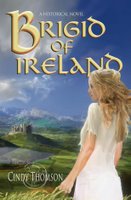
    New Christian Novel About Saint Brigid


    Cindy Thomson posted a comment today letting us know about her new novel about Saint Brigid:

    "Hi!

    "Just wanted to let you know about my new book, Brigid of Ireland. It's releasing this month (March 2006) by Monarch Publications in the UK and will be available soon after in the US, distributed by Kregel Publications. Please visit www.brigidofireland.com for more information.

    "I also just started a blog (not much there yet) at http://celticvoices.blogspot.com/ Thanks."


    Here is a little about the book from her website:

    "A luminous story of the young slave who became a national heroine.

    "Brigid is born in 5th century pagan-dominated Ireland, the daughter of a slave woman, and a slave herself to her brutal father. Torn from her mother, desperately seeking love and acceptance, Brigid converts to the new religion popularized by the traveling preacher Patrick - and the miracles start.

    "But so does the opposition, from rulers and sorcerers opposed to her faith and growing fame. The Irish people cling to superstitions and fears. Can she overcome them - and face her hatred for her father? Can she find the mother she misses so acutely? Has she truly been called by God?"

    and a little about Cindy herself:

    "Cindy Thomson writes fulltime from her home in Ohio despite the distractions of two young adult sons and another in high school, two dogs, a cat, and countless numbers of lizards. (Fortunately her sons take care of the zoo!) A former teacher and amateur genealogy buff, Cindy has always had an active imagination and a love of history. Preserving our spiritual and genealogical histories is her passion.

    "Cindy and her husband Tom are active in their church and small group ministry.

    "Brigid of Ireland is her first novel. She is at work on another novel set in ancient Ireland."


    Those interested in Celtic Christianity will find many treasures in the wonderful books of Esther de Waal. A good place to start is Every Earthly Blessing.*

    Esther also leads Celtic pilgrimages--each a "journey back into the days of the undivided Church"--through the Benedictine Sisters of Mount St. Scholastica in Atchison, Kansas.

    Best of luck with your writing, Cindy, and blessings on your spiritual path. Thanks for letting us know about your book.


    "So the Celtic approach to God opens up a world in which nothing is too common to be exalted and nothing is so exalted that it cannot be made common."

    Esther de Waal

    *Editorial Reviews of Every Earthly Blessing:

    Spiritual Book News
    ... excellent addition to your personal collection of works on spirituality, and is also a wonderful resource to prayer circles... inspires.
    Timothy Joyce, OSB, author of Celtic Christianity, Spiritual Book Associates
    Among the plethora of books on Celtic spirituality... this one remains a treasure... for beginners and Celtic students...