Thursday, November 29, 2012

Patricia Monaghan


I have been hanging on to announce the upcoming release of Brigit: Sun of Womanhood, a Brigit anthology edited by Patricia Monaghan and husband Michael McDermott.

Very sadly, I must announce Patricia's death instead. I will reprint her husband's words here, copied from Agora


I am devastated by the loss of my beloved wife and partner in all things, Patricia.  I am also filled with gratitude and love for all the wonderful things said about Patricia.  She has left our lives and yet she will live long.  There is a huge hollow in me and in the life and all the things that Patricia and I did and will do.
She traveled a journey with cancer these last 2 years.  It was a journey of hope and disappointment. It was a journey that included her work, whether it was finishing the paperback version of Goddesses and Heroines, how to strengthen the Black Earth Institute, the decorating scheme for the Wisconsin house after we moved from Chicago, or how to control the temperature in the new root cellar. She was concerned that we had not yet put away the dried beans from the garden. On Friday evening, we were working on editing a manuscript until 11:30 at night.  She died at home in my arms on Sunday morning at 3:45AM.
She didn’t like to be called brave, though she was.  She didn’t at all like being called a force of nature, but she was. She didn’t like it when people said, “How can you do so much?”, but she “did” from morn ’till night.  We would work hard all day on many things and then say, “Well, at least we got a little bit done.”
Patricia was a scholar, artist, spiritual practitioner, and leader and political activist.  She was a gardener and literally a path creator. One of my favorite memories is of her pulling our large honeysuckle bushes in the wet spring soil to create a path in our woods.  This creation she carried into all things, whether leading us to the goddess, to a land ethic, or to the struggle for a more just society.
There will be an informal get together at Brigit Rest (in southwestern Wisconsin) this Saturday, November 17, from 2PM to 7PM.  More like a potluck where in addition to covered dishes, bring memories or mementos of Patricia.  (Bring the covered dish, deserts and libations as well).
A formal ceremony will be held on Saturday, December 1 at Brigit Rest as well.  There will be a service at the Madison meeting hall of the Society of Friends (Quakers), likely the same day.
Let us all honor Patricia for all the things she was and will be.
*************************************************************
You may wish to visit Patricia's obituary at Wild Hunt. For memorial information, go here
Brigit's blessings on your journey, Patricia.

Sunday, November 25, 2012


The following post is reprinted from 
Woman Spirit Ireland, the site belonging to The Institute of Feminism and Religion. I reprint it here because it is rare to find instructions on how to actually gather the rushes you use to make Brigit's Cross. See below for the skinny!


Brigit(The Institute for Feminism and Religion aims to explore a prophetic approach to feminism and religion, inclusive of many traditions and emerging consciousness in Ireland. We do this by providing opportunities for women to reclaim religion by engaging theoretically and experientially with the issues or feminist theology, ethics, spirituality and ritual.)


Making Brigit’s Crosses 

Merovee Guerin


Tiny Crosses


The traditional cross is made from either field or lake rushes. Made from field rushes, it loses its freshness as it dries. The lake rushes are more sturdy, and the cross a bit bigger. I also found a way to make a cross which looks from the front exactly like the traditional cross but has the advantage to keep its shape when finished. It comes from the Maori tradition. 


Field Rushes


For the Brigit celebrations the rushes are pulled (not cut). One does not need a lot of rushes never more than 40).  So I think it is worth pulling them with awareness.

Place your hand very low on the stem of the rush and pull steadily.  When the rush does not break it has a beautiful white/cream/yellow part which contrasts nicely with the deep green.  I often use this for effect in a cross.
Field rushes are the rushes one can see in any field.  But in February it is difficult to find beautiful rushes as they are often burnt by the gales.
Sometimes one might be lucky and find rushes tucked in the hedge at the edge of a field, or in a low part away from the wind.

In general I go to the forest.  It needs to be low lands forestry.  There are often big ditches in the forestry and there, are the lush rushes which will be pliable.

Wear wellies and gloves.

Enjoy!


Harvesting Lake
Rushes

Lake rushes must be harvested in June or July.  Do not leave too late as they lose their pliability and get spotted.Find a lake with shallow water.  The rushes grow in 2 feet the water.  Cut the rush as low as possible.

I usually bring a rope which floats on the water and keep the cut rushes together. Dry rushes in a well aired area. Turn them from time to time.  Keep away from direct sun.

Store in a dry place.

Before using the rushes I usually lay them in water for a few minutes and wrap them in  plastic to allow the water to soften the outside fibres and make the rush more pliable.

Go with someone.  Someone stays on the shore.

Wear some kind of foot protection.

Have fun.
Traditional Brigit's Cross
Maori Cross

Friday, November 16, 2012

St. Bridget Spirituality Centre


St. Bridget Spirituality Centre of Sherwood, Wisconsin, is an Anglican ministry inspired by Bridget of Ireland, Celtic Christianity, Hildegarde of Bingen, and other sources. Rev. Dr. Ann Barker and Rev. Chrystal J. Reichard offer weddings, religious education, faith formation, and retreat services. With an emphasis on soul companioning and the mind, body, spirit connection, the reverends have much to offer Protestant seekers of a deep spirituality.

Saturday, November 10, 2012

"The Brídeog" by Casey Wolf

If you peer up at the top of this page you will see, next to the Home button, a link to a second page where you can read the short story "The Brídeog"  by Casey June Wolf. It tells the tale of an Imbolc visitation to a house with one believing, and one very disbelieving, woman.

This story was first published in  Escape Clause: A Speculative Fiction Anthology, edited by Clelie Rich (2009) and is reprinted by permission. To make it simpler to find I will add the link here.

The drawing used with the story is by E.E. Evans, and appeared on the cover of his book Irish Folk Ways (1957).

Wednesday, October 17, 2012

Brat Brigid Festival in Armagh (2010)


I'm wondering how often the Archdiocese of Armagh's Office of Pastoral Renewal and Family Ministry might offer a Brigit festival. This was the roster of events for the one in 2010. Sounds as if it was amazing. (They are hiring, by the way: SMA are looking for a Laity Coordinator. If you are interested in this post, click here for more details.)

Brat Bhríde - St Brigid's Festival

Brat Bhríde welcomes you to this festival which celebrates Brigid of Faughart and the Celtic festival of Imbolc in myth, landscape, folklore, spiritual customs, music poetry and dance. The emphasis of this festival is to revisit and reclaim the richness of the traditions associated with Brigid of Faughart, in ways which are relevant to our lives in the 21st century.
The lectures and workshops will offer opportunities for expanding and deepening our knowledge of Brigid for tasting the Wisdom that she was and still is, for integrating feminine consciousness more surely to contemporary culture.

The music and the time honoured rituals associated with Brigid and Imbolc will nourish our hearts and souls, and give us confidence in these uncertain times.

Brat Bhríde (Maura Lennon, Mairéad Heaney, Dolores Whelan, MariAnne Gosling, Maura Matthews, Catherine Pepper and Noreen Townsend ) is a voluntary group who have come together to organise this event.
The festival is supported by County Louth Tourism; Louth Heritage; Create Louth; Louth County Library; An Tain Theatre and DKIT.


Wednesday, 27th Jan:

Healing Circle 7.30 p.m
Facilitator: Fr. Tom Hamill

Venue: St. Brigid's Special School, Ard Easmuinn Cost: €10

Thursday 28th Jan:

Cross making workshop for school children 11.00 am
2.30pm
Facilitators: Maura Lennon and Una Casey

Venue: County Library Roden Place Dundalk Free event


RECEPTION of Sacred Flame & Healing Water 4.30pm

Venue: Town Centre (opposite Courthouse)

This ceremony brings together two symbols associated with Brigid, the Sacred Flame from Kildare and the Healing Water from Faughart Well.

Invitations have been extended to representatives from all the traditions.
We hope you will join us in this special celebration.


St. Brigid, Glassdrumman, Co. Armagh

Brigid and the Cosmic Landscape 8.00pm
Speaker: Anthony Murphy

Venue: County Museum, Jocelyn Street, Dundalk Cost €5
Anthony Murphy is an author and editor of the Dundalk Democrat.
He is co-author with Richard Moore of Island of the Setting Sun.


Friday Jan 29th

“Exploring the magic and the mystery of Water” 1.00pm
Speaker: Dolores Whelan

Venue: Dundalk County Library

In this talk Dolores draws on the work of Dr Emoto, a Japanese researcher, whose work shows the amazing effect of thinking and music on the crystalline structure of water. Dolores explores what this might mean in our lives especially the healing aspect of water. Free Event

Dolores Whelan is author of Ever Ancient Ever New Celtic Spirituality in the 21st Century. She facilitates retreats and workshops which bring together insights from science and spirituality.
www.doloreswhelan.ie


Friday Jan 29th:

Brigid brings new life to today's Ireland
Rekindling the fire of Brigid
Facilitator: Padraigín Clancy 7.30pm
Venue: Armagh Diocesan Pastoral Centre, The Magnet, Dundalk Cost: €15

Padraigín Clancy is an Irish Folklorist and historian with a special interest on Celtic Spirituality. She facilitates retreats that embrace Celtic spirituality, in Ireland USA and Australia .She is editor and co-author of Celtic Threads Exploring the wisdom of our Heritage (1999)

************************************


Saturday Jan 30th :

Registration for events in Armagh Diocesan Pastoral Centre, 9.30am

The Rites of Brigid Goddess and Saint 10.00, 11.30am
Speaker: Fr. Sean O'Duinn

Venue: Aramagh Diocesan Pastoral Centre, The Magnet, Dundalk Cost €10

Fr Sean O'Duinn is a monk in Glenstal Abbey and author of Where three streams meet and The Rites of Brigid Goddess and Saint. For many years he has lectured in Celtic Mythology and Folklore in Mary Immaculate College in the University of Limerick.

**********************************

Turas an Chroí - Journey of the Heart (Workshop 1)
Music and movement take us closer to what language cannot reach. It is a journey into stillness, mystery and our own creativity, the journey of the heart. This is an invitation to explore chant, meditation and movement through the depth, beauty and richness of our Celtic heritage.
12.00 - 1.30pm
Facilitator: Deirdre Ní Chinnéide
Venue: Armagh Diocesan Pastoral Centre, The Magnet, Dundalk Cost: €15

Deirdre Ní Chinnéide has sung extensively in both Irish and English for many years. She explores the healing potential of sound and song with particular connection to the Spirit and Shadow of Celtic Consciousness.

***************************************

Does Brigid keep us right around here? (Workshop 2)
3.00pm -5.30pm
Facilitator: Tom Hamill
Venue: Armagh Diocesan Pastoral Centre, The Magnet, Dundalk Cost €25
Tom Hamill is deeply committed to, and experienced in offering opportunities to adults whereby they can grow in self-knowledge, compassion and a sense of interconnectedness.

St Brigid's Church, Belleek, Co. Armagh


Booking through Library phone 042 9353190

© All material on this website is copyright of the Office of Pastoral Renewal and Family Ministry, Archdiocese of Armagh

Designed and developed by GetOnline

Saturday, September 08, 2012

Brigit and Blindness


Votive offering representing eyes.

Musée Archéologique de Dijon


On hearing that a friend and follower of Brigit is developing cataracts, I remembered reading a number of tales of Saint Brigit that concern blindness. I wanted to look back through those stories to see if there was anything that might be of use for her. I often find some subtle insight offered if not in the tale’s intended message, then in some detail within it. This is a personal thing, and I doubt we would all find the same meanings, or any at all, necessarily. I have not offered all of these to her—it is probably not the time—but I will offer a few to you in case they are of use.

***

Brigit is no stranger to blindness. In a gruesome story from the 8th century "Irish Life of Brigid", the Bethu Brigte, Brigit blinds herself in order to block her forced marriage. She is miraculously healed with the aid of a stream created by her own staff, but all attempts to marry her against her will are ended. (She takes violent eye-related revenge on one of her brothers for his malicious part in all of this.)


There are many references in her Lives to Brigit healing the blind. In Faughart, her supposed birthplace, one of her bullaun stones has the power to heal spiritual blindness.


But she didn't always cure the affliction. In the Leabhar Breac (Speckled Book) of the 15th century, it says,She bettered the sheep: she tended the blind: she fed the poor.” Tended does not necessarily mean cured. If caring for, and not curing, is what is meant here, this suggests to me that there are times when she finds it preferrable to leave things as they are. In looking at my own life, I know that, painful as it is, sometimes we don’t gain the outcome we want and pray for—yet sometimes another outcome, very much unwanted, leads to a different blessing altogether.


A couple of her tales hint at this.


Once, Brigit relied on a blind man to assist her when no one else was able1. Inspired by a vision, Brigit wished to have the whole Roman ritual and liturgy brought to her. Three times she sent disciples to Rome to fetch it. Twice they returned having forgotten everything they learned. The third time she included with the disciples a “certain blind protégé” of hers who was blessed with the ability to remember everything perfectly. En route the pilgrims met with a storm and dropped anchor; they were afterwards unable to retrieve it. Drawing lots, the blind man was given the job of diving deep to recover the anchor, but although the ship was freed, he did not return. He was lost until the crew met the same difficulty on another day, being forced to drop anchor in the same place. When they hauled the anchor aboard he climbed up with it, carrying the Roman Rite and a bell that came to be known as the “bell of the blind son.” This story was meant to show Brigit’s support for the Roman versus the Irish Christian traditions,which I suspect wasn’t a big interest of Brigit’s, given when she lived. What I find interesting, though, is that the only person with the wisdom and vision to perform her miracle is the one man without sight.


Colgan, in his Trias Thaumaturga, Vita Quarta S. Brigidæ, tells a particularly moving story about blindness (also related in O’Hanlon’s Life of St Brigid):


One evening, she sat with Sister Dara, or Daria, a holy nun, who was blind2, as the sun went down; and they talked of the love of Jesus Christ, and the joys of Paradise. Now, their hearts were so full, the night fled away whilst they spoke together, and neither knew that so many hours had sped. Then the sun came up from the Wicklow mountains, and the pure white light made the face of earth bright and gay. Bridget sighed, when she saw how lovely were earth and sky, and while she knew that Dara s eyes were closed to all this beauty. So she bowed her head and prayed. She extended her hand and signed the dark orbs of the gentle sister. Then the darkness passed away from them, and Dara saw the golden ball in the east, while all the trees and flowers glittered with dew in the morning light. She looked a little while, and then, turning to the abbess, said: “Close my eyes again, dear mother, for when the world is so visible to the eyes, God is seen less clearly to the soul.” So Bridget prayed once more, and Dara’s eyes grew dark again.


1Life Of St. Brigid, First Abbess Of Kildare, Special Patroness Of Kildare Diocese, And General Patroness Of Ireland by the Rev. John O'Hanlon, M.R.I.A. (1877)

2Apparently she was blind from birth.


Friday, August 17, 2012

Animated Brigit!


AwesomeeHappyChappy posted this bouncy celebration of Brigit's acquisition of land for her monastery:


Thursday, August 16, 2012

Brigit's Cloak & An Ancient Yew Forest


Jo at Celtic Memory Yarns wrote a year and a half ago about putting out a brat bhride for the first time, and also about her visit to an ancient yew forest in Killarney. (Also a lot of other things. For the full post, or to subscribe to her blog, go here.)
Monday, April 04, 2011


Of Brigit's Cloak, An Ancient Yew Forest, Bee Judgements and Bould Actors (excerpt)

I should have thought of it sooner, of course. Isn't it always the way, that you have studied something for years, and yet you never apply its practicalities to your own life? That back of mine wasn't getting any better, and I was still unable to sit at the computer - or anywhere else for that matter - for more than two minutes at a time without discomfort.

With time to think (a rare commodity), I remembered that the morrow was Feb 1, Brigit's Day, Candlemas, Imbolc, whatever you call it in your corner of the world. And that very day, a friendly woman who runs a great coffee house in Macroom town square, had said her family had always put out the 'Brat Bride' on the eve of her festival. I'd been checking for old customs and traditions as usual, for De Next Book, and noted this down carefully as evidence of the old ways still continuing in West Cork. Somewhere between twilight and dark, the rusty penny dropped in my own brain.

Why not put out the Brat Bride myself, and see would it help the back any? (It's pronounced 'brah breed-eh' by the way.) This is a length of ribbon or cloth placed on a friendly bush on Brigit's Eve where the dew or rain can fall on it, and Brigit herself can confer power upon it as she passes. Next day it is brought back into the house, dried, and kept carefully for the year ahead, to apply to anyone suffering from pain or injury. What better to use than the Advent Lace Shawl I'd knitted along on with Zemy during December? Just the right sort of thing to appeal to Brigit, I felt.


Outside the front door it went, to be carefully draped around the bay tree which stands there in a pot. Didn't dare to place it any further afield, as the wild winds would certainly blow it to Tir na n'Og and I'd never see it again. Brought it in duly on February 1, dried it, and laid it across my bed that night. Possibly it was going to happen anyway, especially with the physiotherapy I'd been getting, but my back started to improve right away.

Now it's in a place of honour on the spinning chair, ready for the next emergency. Old ways are good.


So much recovered did I feel that we headed down to Killarney in search of a very ancient yew forest, the only one remaining in Ireland, and one of just three in Europe overall. It has all kinds of official protective status now, but for me the important thing was that it had been there back in the mists of time, when trees were highly valued and believed to be the holders of considerable magical powers. Oh of course we know better these days. How could a tree be stronger or better for us than a computer chip, for heaven's sake? What benefit could a bush possibly bestow that modern technology cannot?

Here's just a glimpse of the edge of that ancient wood, which was old when the Tuatha de Danann walked this land. You'll get more when we go back in brighter spring weather to do a serious photoshoot. But let me share with you a very very venerable quotation which I discovered recently while researching De Next Book. The speaker is Fintan the seer, who claims to his hearers that he survived the Deluge and has lived in Ireland ever since, seeing kings come and go, landscapes change, while he lives ever on.

‘One day I passed through a wood of West Munster in the west. I took away with me a red yew berry and I planted it in the garden of my court and it grew up…’ Now you can't get more west Munster than Killarney, and I think that Fintan is surely speaking here of this selfsame ancient yew wood of Reenadinna, now within Killarney National Park. It gives you a strange feeling to stand silently amid those trees and moss-covered rocks, and think how long this forest has been here. Of course the individual trees grow and die (though yew has a very long life, sometimes a thousand years), but new ones spring up from their roots or their fruit, and the forest continues in an unbroken tradition.

Saturday, August 11, 2012

Song and Image: A Beautiful Rendition of "Song to Brighid"

Shaman Light by Amanda Clark


A lovely circumambulation:

I was doing a "Brigit" search a few minutes ago and found a YouTube video of Lisa Thiel's "Song to Brighid", from her album Invocation of the Graces. I wasn't mad about the video portion but I wanted to add the video to Brigit's Sparkling Flame, realizing I had listed it before but never shown it. So I went searching for a version I liked better.

Before I tell you what I found, a bit about Lisa from her
webpage:

Brighid by Lisa Thiel
"Lisa is a priestess of Brighid and Kuan Yin in the Fellowship of Isis and honors the old Celtic Wheel of the year. She is also an accomplished astrologer, tarot reader and interpreter of dreams. 'My work is inspired by my dreams and visions that come from my spirit, my sacred dreams. My music and art are the gifts of the encounters with my soul.'"

I am happy to share her Brighid song with you.

To my delight Boudicca17368 had put together the song with some amazing imagery, all by the same woman: one Amanda Clark.

I must see more of this Amanda's art, said I! A quick search (Brigit bless the internet), and I was at her blog: earth angels art. (See also her website.)

According to her Fine Art America profile, "Amanda Clark lives in a country village in England UK. She is mainly a self-taught artist and comes from an artist family. She...gained a National Diploma in ceramics and surface pattern in the early 1990's...and is inspired by folklore and myths and the peacefulness of beautiful landscapes with a twist of fairytale and magic. She paints in acrylic and watercolour creating depth and pattern to the beautiful colours in her creations. She has also illustrated four books and is currently painting and line drawing for her 5th book about magical herbs."

There is a little surprise in all of this, though.

When I found Amanda's blog and went to see her pictures there, I discovered that an hour previously she had listed Brigit's Sparkling Flame, specifically the post "Goddess of Smithcraft (with emphasis on Blacksmithing)", on her own blog! Round and round the garden with our teddy bears! And she had done this only moments after I posted it.

A little more digging around revealed that Amanda is a follower of this blog. (Hi, Amanda!) And interestingly, when doing my Amanda search, I discovered another Amanda Clark in my own country of Canada who is...a metalsmith. (I'm getting a little dizzy now.)

So! On to the video.

Goddess of Smithcraft (with emphasis on Blacksmithing)

Blacksmith Woman


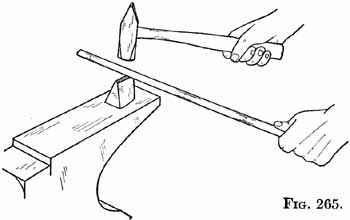
For the smiths among us, and those Brigidines interested in knowing more about the smith side of the goddess, there is available online BLACKSMITH PRACTICE: EM 862 (War Department Education Manual).

Metal Web News provides the manual with links to the various chapter. Or you can download it from scribd, sans links.
I draw your attention to this one piece, but in fact Metal Web News has a host of other articles branching out from their Blacksmithing page, as well as a Forge-Foundry-Casting page with lots of pictures and how-to information.

For chat about blacksmithing, go to the John C. Campbell Folk School Blog's "Blacksmith Shop" and get in on the conversation.

Wander over to Blacksmithchic.com, the website of Lorelei Sims (Artist and Blacksmith) for a look at her work, her farm (Pasture Prime Commune!), her book (The Backyard Blacksmith), her dogs...Heck, she even has blacksmithing t-shirts, including my favourite, the Fire Goddess T-Shirt:

For those who like video, go to Anvilfire.com (a rich site and host of three smith-related blog rings) and check out their in-depth review of the Forge and Anvil TV series and books hosted by Alan Rogers in 1995. Good news! The series is now available on DVD.. You can catch lots of blacksmithing videos on YouTube as well, from the amateur, like christopher5361's homemade forge video, to the professional, such as the previews of Bob Rupert's TV shows (Blacksmithing with Bob Rupert). Check out "Let's Make a Nail." If you like what you see you can buy the DVDs from the makers here.

Maybe you are really interested and want to take a course. There are lots of places to do that now, though the craft nearly died out at one point in North America. How about rounding your knowledge out nicely at the John C. Campbell Folk School in North Carolina? Besides basic blacksmithing the school "provides experiences in non-competitive learning and community life that are joyful and enlivening. Located in scenic Brasstown, North Carolina, the Folk School offers year-round weeklong and weekend classes for adults in craft, art, music, dance, cooking, gardening, nature studies, photography and writing."

Renaissance Lady Blacksmith by Francesa Miller
You have to snoop around a bit to get a lead on all the smithing courses, depending on where you live. There are a couple of lists online (eg here) but they aren't exhaustive. You might do best to search "blacksmith" "school" and the name of your area, or you may miss something small but good nearby, as all the larger ones crowd to the top of the search results. If you love horses, you can get a diploma as a farrier at Olds College in Olds, Alberta (a really lovely area to squirrel away for two years, I should think). Another is the Maritime Farrier School in Truro, Nova Scotia, which also is a beautiful spot to be. Or if you want something that will take you from basic blacksmithing to wildly creative art- and armour-making, try Thak Ironworks in Floradale, Ontario.

And once you've got a start on your craft, you may want to join a blacksmithing association, such as the Vancouver Island Blacksmith Association. ("VIBA a non-profit society formed for the sole purpose of keeping blacksmithing alive in British Columbia. Members demonstrate at various local events including major annual events at the Fairgrounds, and at other local country fairs, Heritage Festivals, and schools. VIBA also hosts workshops featuring professional smiths.")

Of course, Brigit is not only a goddess of blacksmiths. There are whitesmiths, bronzesmiths, silversmiths, and so on. I leave it to you to search out some good contacts (and perhaps provide us with links).

Antiques
Finally, you may just want to admire or purchase metalcraft, new or antique. Or how about new but modelled on antiques? Mark Shier of Gaukler Medieval Wares is one smith who delights in talking about his wares, and who takes great care in creating copies of ancient handicrafts, as well as selling antiques--coins, belt buckles, and so on. And yes, you could afford a lot of them. Why, I bought a handmade (and perfect!) bronze sewing needle from him for 7$.

Mark's creations
In his words, "Gaukler Medieval Wares makes jewellery and metalwork in ancient and medieval styles, using the methods and materials of the past. I do custom work, as long as the design is medieval or earlier. We also sell authentic ancient and medieval antiquities. All antiquities pictures have a white background, and all of my work has a black background."

Versatile Blogger Nomination


Oops. I just knocked over a vial of water from Brigit's well in Kildare, grabbing it instead of the mouse. Worry not--it's capped.

This is an interesting thing. Yesterday I received a note from Runningwave, one of the Daughters of the Flame.

Dearest Mael,

Since I admire your blog and want to support your spread of Brigit's flame of inspiration around the world, I have you nominated for The Versatile Blogger Award.

You are one of the writers whose creativity inspires me and has encouraged me to see the world in new ways. Being a part of the Daughters of the Flame for a long time now has given me a community of women who want the Peace and Awen of Brigit to be known and adored.

My own blog post and all the nominations are posted here: http://runningwave.blogspot.com/2012/08/with-admiration-to-my-fellow-artists.html

I've posted a link to your blog on my own, but you are truly not under any obligation to post back. I just wanted to honor all of the creativity you share on this space.

Very sincerely,
~runningwave~

Thanks to you, runningwave, for your appreciation of Brigit's Sparkling Flame. It occurs to me, too, that the sloshed over holy water was a tiny runningwave all its own. A nod to you, as it were.

Sweet blessings of Brigit on you, this day and every day, this night and every night.

Thursday, July 12, 2012

Booklets for Sale


A reminder from Hollee Swann:

Brighid and Me

Experiences with the Goddess Written by devotees from around the world.

Pathways to Elen

Written by Followers of the ancient, British, antlered Goddess.

£4.50 for 1 book; £4.25 each for any 2 books

£4.10 each for 3 or more booklets on one order

Postage at cost

Profits from sales to Alzheimer’s Society

& Woodland Trust


To read extracts or order, visit www.goddessdance.co.uk


Saturday, July 07, 2012

OK, This is Just Plain Weird: Post-Apocalyptic Brigit?


I won't even begin to address the "all things fire and warfare" bit. I hesitate to post this but if I can tell you about Brigit socks, surely I can't hold this one back... I haven't read it, so I can't say if it satisfies all its claims. If you read it, let us know!

Brighid's Cross, by Cate Morgan

One woman with a job to do. One gorgeous hacker with a plan. One apocalypse. Any questions?

Aika Lareto is a descendent of St. Brighid in her incarnation of all things fire and warfare in a time when heroes were revered as gods. In 2025, this means Aika is hunted by all things demon and government. All she wants is to get on with her work as guardian of the dregs scraping out a fringe existence in London’s blitzed underground—the lost, forgotten and the just plain ignored.

Declan Pryce is the hacker who finds her first. Quite a feat, considering current ruling government conglomerate Dreamtech has issued a bounty on Aika’s head for her ability to bypass their security systems.

When she escapes Dreamtech’s net, the vote is unanimous—Aika is a liability in need of immediate resolution—dead or alive is entirely her choice.

No choice, really. She’ll take death over disloyalty every time. Declan has a plan that doesn’t include falling for an impossible woman in an impossible situation. She has plans of her own that don’t leave room for a love life.

If they’re incredibly lucky, it just might work.

Product Warnings

Contains a hot hacker with a penchant for redheads, battles with demons, a little light torture, explosions and a heroine willing to do whatever it takes to do her job.

Kildara Centre & Brigid's Well (Course)


The Australian Brigidine Sisters have in Malvern, Victoria the Kildara Centre with many facilities including a non-residential conference centre, Brigidine archives (and better still, an archivist to help you find what you need there), and so on.

They annually offer Brigid's Well, a course for Adult Searchers.

From their site:

The association between water and spiritual power can be traced back to the Bronze Age, and water (the well) is very prominent in most Celtic Mythology. Large bodies of water, such as lakes & rivers, were important sites for ritual activity. Many archeological discoveries today witness to the ways in which people in those very early times threw jewelry, weapons, body amor, all sorts of high quality metal work into the lakes to appease their gods and goddesses.

There are countless wells scattered across Ireland named after Brigid, and associated with these wells is healing, nourishment, hospitality and blessing for people in need. One can easily imagine the water from those wells, water that is sacred, coursing through mother earth and reaching the Antipodes and flowing through our Australian waterways.

The story in the Scripture of Jesus meeting the Samaritan woman at the well and the transformation that occurred in both through their interaction has become the symbol for our Brigid's Well Program at Kildara Centre.

It is no accident that today Kildara Centre, is situated on a very ancient aboriginal site consisting of a huge underground spring. Imagine it as a watering hole for our indigenous sisters and brothers in ancient times. Today it is covered with layers and layers of concrete, buildings, roads etc., yet evidence of its existence and movements is still clear, its dampness quite pervasive, and its power ever present.

Brigid's Well is the name given to our Program for Adult Searchers. In various ways, this Program offers :

life-giving interaction
creative prayer experiences
opportunities for personal growth
discussion of current issues
to break open the Word
involvement in issues of justice
deeper understanding of God
to explore the Celtic tradition
to re-interpret Brigid
to develop various concepts of spirituality
a place to share views in safety and freedom
an alternative to institutionalised religion
some religious experience
assistance to find meaning
counselling
spiritual direction


We have established a Brigid's Well Community which engages in attempting to break open the Word raising issues of injustice in the wider community, and in breaking open the lives of Brigid and Delany discovering what their stories have to offer us today.

This community also hosts some of the sessions of the Program and plans for the following year.

Download the 2012 Programme booklet.

It all starts with lighting a match.


A Letter from Erynn
Winter Solstice 1996

It all starts with lighting a match. A simple thing, really. When the match is touched to the candle wick, I offer quiet prayers with upraised hands before the altar. Quiet seems to be the focus of those days. To keep the flame has been a calming and centering process, a ritual of no-ritual, a meditation on quiet and the flickering quality of candlelight.

I have not had major revelations on the days and nights of my shift since I began, back at the founding of (Daughters of the Flame). Instead, the flame has been a steady, connective presence. I take the spark from the woman who precedes me and pass it with care to the next woman on the list. I imagine that the earliest priestesses of this light were bound together with similar silence, their only sounds the crackling fire in the sacred hearth, the murmurred prayers, the rain falling softly outside.

What did they do together in their devotion, I wonder? Did they lie at night in darkened chambers, composing poems? Did they tend a garden of healing herbs? Were the sparks of the sacred flame carried to a forge where bright blades were beaten out in her honor? Were their days spent carrying wood, or later, when the wood was gone, bringing dried peat into the enclosure to keep the flame burning? I think they knew the wisdom of chop wood, carry water as a path of spirit. I think, in some ways at least, they were like me. There are wild hazel nuts on my altar. They come from Lincoln Park, down the hill from my house. A red silk cloth, woven with gold, from the sari of a Hindu saint covers the small shelf that is my altar. There is a black and white photocopy of the triple Brighid from a Celtic League calendar taped to the wall above. Seashells, which are used in Ireland and Scotland to decorate the Brighid dolls of imbolc, are scattered on the cloth, piled at the foot of the red glass candle. Rowan and juniper berries are mingled in a small wooden bowl, for protection and for purification. There is a sprig of cedar here as well, with its tiny brown seed pods. This reminds me of the land on which I live, the spirits of Puget Sound. Ogham fiodh, burned into hazel twigs, lie in a pile here awaiting her pleasure, and a tiny cup of hazel honey mead. These are the tools of my poet's art.

I do no magic at this altar, I raise no power here. Instead, there is poetry in my house. Notebooks open, scribbled lines that try to capture the flash of a dream's image or the subtle light of an autumn afternoon. I meditate on the continuity of the flame, one hand to another, one match lit in prayerful attitude.

Sometimes I miss my shift for one reason or another. I look at the calendar a day late and feel a pang of regret, a little embarassment at the fact that I am human and fallible. Despite my flaws, I continue to tend the flame. There will be another shift in a few days, and I can redress the accidental neglect at that time. I've never felt that Brighid was unforgiving of my occasional lapses. Somewhere in the world, some sister remembers and carries on. She starts with lighting a match.

-Erynn

(Letter from Erynn Rowan Laurie. Art by Rowan Hagen.)

Thursday, June 21, 2012

RTÉ, the St. Brigid’s Cross and the significations of domesticity


Ciarán Swan of The Design Research Group ( Design, Representation, Society ) posted this intriguing essay on 14 May 2007. I am including the full post here but only one of the graphics. Please follow the link to the original posting to see the other two images:


Incalculable good, irreparable harm: RTÉ, the St. Brigid’s Cross and the significations of domesticity.

New Year’s Eve, 1961 7.00 p.m. and the first words to be heard by a grateful nation on Telefis Éireann were the following read by Éamon de Valera.

“I am privileged in being the first to address you on our new service, Telefis Éireann. I hope the service will provide for you all the sources of recreation and pleasure but also information, instruction and knowledge. I must admit that sometimes when I think of Television and Radio and their immense power, I feel somewhat afraid. Like atomic energy, it can be used of incalculable good, but it can also do irreparable harm. never before was there in the hands of men an instrument so powerful to influence the thoughts and actions of the multitude”.

And accompanying those words was a simple stark image that was to remain the visual signifier for RTÉ for the best part of three decades afterwards.

This was the St. Brigid’s Cross. This symbol woven from rushes or straw was a feature of Irish houses for centuries. The first record of it dates from the 17th century, although some believe that the genesis of the Cross was in pagan sunwheels. But in it’s more recent incarnation it has an interesting symbolism which links in part to the mythos around St. Brigid who is the second patron saint of Ireland and as a woman embodied a range of significations. According to legend St. Brigid wove a cross in order to convert a dying man to Christianity.

Édith Cusack, head of Women’s Programmes was the one to suggest the use of the Cross as the symbol of Telifis Éireann.. (worth noting that Telifis is in fact a neologism developed by the actor Éamonn O Guallai from tele (from afar) fis (vision).

Between 1988 and 1989 a new logo replaced it which dispensed with the St. Brigid’s Cross. This generated sufficient controversy due to that feature that it lasted only one year. There was no St. Brigid’s Cross in the next logo used, but in 1993 it was reintroduced as a visual projected against stones from the entrance to Newgrange. This elision of two rather different times from Irish history and culture is interesting in itself, but

Again it vanished for five or six years only to reappear in a similar fashion in 1998.

But this wasn’t the first time the state utilised the symbol. In the late 1940s and early 1950s the Department of Health used it on much of their printed material. In this instance it was a hand rendered illustration of the straw cross accompanied by the Irish name of the Deparment in Gaelic type. In truth the symbol worked well on the printed page, with a clarity that lent itself to black and white printing.


READ MORE!