Sunday, April 16, 2017

‘St Brigid and St Bride in Scotland’ by Heather Upfield


My thanks to Heather Upfield for the following article, in which she shares her understanding of St. Bride of Scotland, and for her patience and sense of humour in dealing with my comments along the way. I hope you will enjoy reading it as much as I have. (And my apologies for being unable to tame the formatting madness that is Blogger.)


While St Brigid of Ireland is well known throughout the World, far less is known about her presence and influence in Scotland. Indeed, many Scots themselves are unaware of this Saint’s impact on their shores. For the past ten years, I have been researching Bridie in Scotland both recording the hundreds of sites dedicated to her and learning more about the mythology which surrounds her.

One of the most significant facts surrounding St Brigid’s crossing of the Irish Sea to what is now known as Great Britain, back in the 5th Century, is that she became known as St Bride in England and Scotland, and frequently St Ffraid in Wales. Her presence in Glastonbury in England, in AD 488 resulted in a chapel she built on Bride’s Mound on the edges of the town. St Bride’s, a famous Church in Fleet Street in London (rebuilt by Wren after the Great Fire of London), has its foundations in a pre-Mediaeval church dedicated to St Bride, beside a holy well. In Wales there is the famous St Bride’s Bay on the west coast.

In Scotland, it is thought that St Brigid arrived at the town of Kilbride (now known as West Kilbride in North Ayrshire) around AD 500, having sailed from Ireland, northwards towards the Isle of Arran. The distance between Ireland and Arran is negligible - on a clear day, it is possible to see the north coast of Ireland while standing on the southern-most beach of Arran. At a time when waterways and the sea were the prime method of transport, it makes it highly likely that this journey would have been something like routine.

Having arrived in West Kilbride, south west of Glasgow, (close to where I live) she founded small monastic communities along the south west coast of Scotland: one on the Isle of Little Cumbrae another on the mainland coast at Southannan, (at the foot of Diamond Hill south of Fairlie Station), and another at Chapelton, (south of Seamill, opposite Limpet Craig). It is likely there were others!

We have to remember, that these settlements were not grand, stone-built monasteries, the like of which appeared during the 11th and 12th centuries, but simple wooden churches within a group of wooden dwellings for adherents. Likewise, St Bride would have not have been dressed in the classic habit and wimple of the Mediaeval nun - she would have been wearing the simple clothing of the day - as illustrated in the Church window from the High Kirk of St Bride in Brodick, Isle of Arran (above). In this window, she is depicted with her guardian wolf and the goose which symbolises the beginning and end of winter. The bottom light depicts St Bride with her boar. The Feast Day of St Bride is 1 February, and her flowers are the snowdrops. She is known as The Great Shepherdess and like the Irish St Brigid, is associated with cows and sheep. There are many prayers in the Highlands of Scotland surrounding Bride and the guardianship of the livestock.

It is believed that St Brigid of Ireland was invited to Abernethy in Perthshire, Scotland, by King Nechtan Mor, King of Dalriada. Abernethy claims that she died there and was buried in the churchyard, before her body was taken back to Kildare at a later date. Another story is that she died on the Isle of Little Cumbrae and was buried there in the Priest’s Grave.

In all respects, St Bride, as she is known in Scotland, is just a different spelling and pronunciation of St Brigid of Ireland. However, the story of St Bride in Scotland becomes more interesting, as there is yet another thread in the story. This is the lustrous and enigmatic St Bride of the Isles. If St Brigid/St Bride was generally a pastoral Saint, St Bride of the Isles is largely a maritime Saint.
In the seas surrounding mainland Scotland are around 790 islands. The most well-known are the Orkney Isles, Shetland Isles, the Outer Hebrides and the Inner Hebrides. It is the Hebridean Islands where the story of St Bride of the Isles begins.

Despite official derivation showing otherwise, ‘The Hebrides’ are popularly known as ‘The Brides’ or ‘Bride’s Isles’. According to local legend, she arrived on the shores of South Uist with an Oystercatcher on each wrist. The Oystercatcher (Haematopus ostralegus) is a black and white shoreline bird, with a very distinctive call. In the Ghaidlíg (the Scots form of Gaelic), the bird is known as Gille-Bhrìde, which means ‘Servant of Bride’. In the mythology, it is said that St Bride of the Isles was being pursued along the beach by villains, when she could go no further and fell down on the sand. As she was preparing to meet her Maker, Oystercatchers on the shore noticed her plight and gently covered her with seaweed, to hide her from her pursuers. After the men had left, St Bride blessed the Oystercatcher for ever more, above all other birds.  Its plaintive call is said to be ‘Bhride Bhride Bhride’. Thus it is that along with the cow and sheep, the most potent symbol of St Bride of the Isles is the Oystercatcher. 


In the mythology, St Bride is carried from the Isle of Iona, in the Inner Hebrides, to Bethlehem on Christmas Eve, to be mid-wife to Mary at the birth of Jesus. In the Ghaidlíg, she was known as ‘Ban-Chuideachaidh Muire’ ‘knee woman of Mary’, as in the Hebrides, women gave birth on one knee.  Not only is she present at the birth of Jesus, but she also takes on the role of the Foster mother of Jesus - ‘Muime Chroisd’. In the Hebridean tradition, a Foster mother was considered more important than a natural mother. They took the view that any woman could become a mother - and be good or indifferent or bad. But the Foster mother took on the rearing of a child who was not her own, and this gave her greater status. In the eyes of the Hebrideans, therefore, St Bride is more important than St Mary and it is she who is considered the true Mary of the Gaels. A Hebridean prayer during labour was ‘Bride, Bride, Come in. Thy welcome is truly made. Give thou relief to the woman and give thou the conception to the Trinity’.

Following the Nativity, the Church celebrates Candlemas forty days after Christmas. St Bride is closely connected to this Festival. When Mary and Joseph carried the infant Jesus to the Temple, St Bride walked ahead of them. She wore a crown of candles and held a lighted candle in each hand. The flames stayed completely still and were not moved by the wind. In some traditions, Candlemas is known as Feast Day of St Bride of the Candles, and she herself is known as St Bride of Brightness.  The legend of the flames also corresponds with what we know of Oimelc (or Imbolc) as a Fire Festival. 


Is this the same St Bride as St Brigid? We will never know the origins of St Bride of the Isles, whether she has a much older lineage, or whether the stories of St Brigid were reinterpreted for the people of the Islands. Kathy Jones and Brian Wright in their respective books on the Goddess, place St Bride/St Brigid as antecedents of the Ancient British Goddess Brighid (also known as Brigit-Ana, or Britannia). It is likely that St Bride of the Isles is also part of this continuum. Sir James Frazer, an anthropologist, in his book on Comparative Religion entitled The Golden Bough (1890), described St Bride of the Isles as ‘The Goddess in a threadbare Christian Cloak’.


Certainly, the mythology and legend surrounding St Bride of the Isles leads one to imagine an older Goddess related history. This is apparent in the story of the battle between St Bride and the Cailleach, which has obvious parallels with the Underworld story of Persephone and Demeter.


The Cailleach is the Old Storm Woman of the Scottish Mountains, who governs winter, and is the enemy of growth. The legend goes, that on the first of November, after a struggle, St Bride is overpowered by the Cailleach, who imprisons her in Ben Nevis - Scotland’s highest mountain. The weather changes: Atlantic storms roar across the land, plants die and growth ceases.  But help is at hand!  After three months of hardship, at the end of January, Aengas of the White Steed dreams of Bride.  He rides his horse across the sea and rescues her from the mountain, on February the First. Spring bursts into flower with the snowdrops and growth is restored to the land.


St Bride of the Isles was associated with the fishing fleets on the Isle of Barra in the Outer Hebrides and is present in milking songs, herding blessings and churn incantations. She is known as The Golden Haired Bride of the Kine. In Kildrummy in north east Scotland, there is a St Bride well to cure cattle diseases. On the Eve of St Bride’s Day, the custom was for the women and girls to make Bridie Dolls from stalks of corn. The dolls would be dressed in white, and adorned with shells and beads. A sparkling bead would be sewn over her heart to represent the Guiding Star of Bride over the Bethlehem stable. The dolls were associated with blessing of the fields and the promise of good crops. Like Brigid, she is also known as St Bride of the Mantle - ‘Bride-nam-Brat’ - but in the Hebridean tradition she hangs her mantle on the sun. In addition to the snowdrop, her flowers are the dandelion and the daisy, both of which represent the sun. The dandelion was especially revered, as its stems produce milk. It was known as ‘Bearnan Bride’ - ‘little notched flower of Bride’. In the Highlands, there was a saying ‘the plant of Bride nourishes with its milk the early lamb’.

Whether we are referencing St Brigid, St Bride or St Bride of the Isles, more substantial stone chapels were eventually built, from around the 10th century. They were usually rectangular, about 12’ x 8’, comprising two chambers. In my research into St Bride in Scotland, I have identified over ninety such Chapels which were dedicated to her, across the length and breadth of mainland Scotland and throughout the islands, up into the Orkney Isles. In the main, these Chapels are known as ‘Kilbride’. The prefix ‘Kil’ comes from the Ghaidlíg ‘Ceal’ meaning ‘Church’ and is a common place name - as in Kilmichael, Kilbride, Kilmarnock and Kildare etc. From the Norse, we get the prefix ‘Kirk’ - again meaning ‘Church’ - so there are a number of Kirkbrides as well.


St Bride of the Isles on the shore, with a lamb., Window and detail, in Holy Trinity Scottish Episcopal Church, Stirling.


The Protestant Reformation in Scotland in the 16th Century wiped out most of these Chapels, and now they are ruins, or a few blocks of stone in a field or merely bumps in the ground. There are, however, thirty living and consecrated Churches in Scotland which are dedicated either to St Bride or St Brigid. Some have their foundations in much earlier chapels from the Mediaeval period and are generally St Bride churches, while others were built during the 19th century, in response to immigrants from Ireland needing a place to worship. In general these are St Brigid churches.

With St Bride of the Isles being associated closely with the sea, there are a number of sea and coastal features dedicated to her, for example: ‘Sloc a’ Brighide’ - Deep of Bride - off the Isle of Lismore; Kilbride Bay - close to Tighnabruaich; ‘St Bride’s Ness’ - Headland of Bride - Isle of North Ronaldsay in the Orkney Isles; ‘Rubha Bhride’ - Bride’s Point - Isle of Jura; and ‘A’Bhrideanach’ - Bride’s Point - Isle of Rum - to name just a few.


In addition to the Hebrides being taken collectively to mean Bride’s Isles, a number of little individual islands are also dedicated to her, for example: ‘Eilean Bhride’ off the south coast of the Isle of Islay and ‘Kilbride Island’ in Loch Fyne. Generally, St Bride of the Isles is thought to embrace all the islands of Scotland. Scattered across the landscape of mainland Scotland and the Isles are thirty-eight farms and steadings named ‘Kilbride’, ten rivers named after Bride, nine hills, and twenty-four St Bride Holy Wells. There is even a Kilbryde Castle! It is possible that these Bridie sites were originally connected with Brighid. Indeed, the remains of Balbridie (‘little town of Bride’ - a pre-historic settlement near Banchory in east Scotland) have been dated to around 3600 BC.


At one time in Scotland’s history, St Bride/St Brigid, or St Bride of the Isles had tremendous influence in Scotland. How much of her life is enshrined in myth and legend and how much is ‘real’ we may never know. For me she has been truly inspirational both as Goddess and Saint. I continue to research sites dedicated to her and honour her in the changing of the seasons and the flowering of the land. Bridie Blessings to all from Caledonia.


Brighid, St Brigid, St Bride, St Bride of the Isles and Scotland’ 
©Heather Upfield, www.brighid.org.uk/scotland_footprints.html, 16 April 2017.


Thursday, April 06, 2017

Amy Interviews Mael Brigde: Brigit Music, Daughters of the Flame, & More!


Well, that was lovely.

I just had a long conversation with Amy Panetta, who found me through this blog a few years ago (although I wasn't really aware of it until she approached me recently on Facebook). Amy is an energetic and very curious young womancurious about things, that is, not curious in herselfand has combined her musical skills and love of Brigit in a number of projects.

Her main focus is Brigidine music, especially that composed in the last decades, and we got together today to talk about it, and about my love of writing songs to and about Brigit. Somewhere between the time we made the plan to talk and the talk itself, Amy asked me if we could do it as an interview, thinking she might use it in her podcast-to-be. I agreed and off we went.

I have been interviewed on paper, or asked to write some reflections on my connection to Brigit, but I have never been interviewed aloud on these matters and some of things she asked about I had never spoken discussed with another. So it was an interesting and fun experience for me, where I got to let my thoughts stretch and my chin wag. (I'm usually more the listenerbelieve it or not, those who know me.)

Amy is an excellent interviewer, with clear questions, a relaxed style, and adding enough of her own thoughts to make it a conversation instead of a monologue. I didn't feel like I was alone and honking, but at ease and chatting with a friend.

Who knows if this will ever be used as a podcast, but it was a good experience, helping me to think in new ways about a subject that is dear to my heart.

I look forward to meeting Amy in the flesh when she comes to Vancouver in a couple of weeks for the CSANA 2017 Conference, (27–30 April 2017, the Celtic Studies Association of North America), where she will be presenting her topic "The Feminine Face of God: Vocal Music Dedicated to Bridget, the Pre-Christian Celtic Goddess and Saint".

This is not an expensive conference, and it runs for several days, so there will be much to bend your minds with if you are able to get to Vancouver, Canada for it.


Image: Croghan Hill (Bog of Allen County Offaly Ireland) by Sarah777. This is the image I looked at throughout our conversation, since we were talking on the computer without video, and it was weird staring at my desktop and all those annoying reminders of things to do.


Tuesday, February 28, 2017

Review: Pagan Portals—Irish Paganism: Reconstructing Irish Polytheism by Morgan Daimler


An excellent primer on Celtic Reconstructionism and the deities and beliefs of ancient Ireland.

 (Also mentioned, Daimler, Morgan, Tales of the Tuatha Dé Danann; Daimler, Morgan, Treasures of the Tuatha Dé Danann; Laurie, Erynn Rowan, Ogam: Weaving Word Wisdom; and NicDhàna, Laurie, Vermeers and Lambert ní Dhoireann, The CR FAQ — An Introduction to Celtic Reconstructionist Paganism.)

So why is this book on a Brigit blog? Because, and I truly do believe this, whatever our background or spiritual leanings, the more we understand about the world Brigit emerged from and the world which embraces her now, the deeper our connection with her will become. 


Pagan Portals—Irish Paganism: Reconstructing Irish Polytheism is another short book by Morgan Daimler that gets straight to the point—a clear, comprehensive manual that dusts away cobwebs and guides the reader in helpful directions. The other such by her that I have reviewed (favourably) was Pagan Portals— Brigid: Meeting the Celtic Goddess of Poetry, Forge, and Healing Well.

By its nature, the present book cannot be as precisely tuned as the Brigit book; its topic is much vaster and its page count similar. Not difficult. Daimler still manages to identify key topics and dispatch them creditably. There are times when I wished for more detail—also not difficult. She footnotes beautifully so that the reader can consult elsewhere for that fleshing out. To attempt to put all the rich detail possible into this book would have defeated its purpose. For clarity on what is a deep and rambling topic, with dozens of possible interpretations of the materials, Daimler’s choice of a smooth outline and spare prose is perfect.

Irish Paganism: Reconstructing Irish Polytheism contains quick, nicely referenced notes on what Celtic Reconstructionism is and isn’t, basic beliefs, deities, spirits, holy days, an Irish Polytheistic approach to ritual, magic and mysticism, and so on.

I read it, without planning to, at the same time as Daimler’s pair of palm-sized bilingual (Irish and English) booklets, Treasures of the Tuatha  Dé Danann and Tales of the Tuatha  Dé Danann. She has selected key passages from Irish myths and translated them here. I found reading these booklets in tandem with  Irish Paganism: Reconstructing Irish Polytheism helped illuminate the character of some of the deities, as well as the sense of story and Otherworld from an Old Irish point of view.

A nice follow-up would be Erynn Rowan Laurie’s Ogam: Weaving Word Wisdom, which goes into greater detail on many of the above elements, including what CR is, its ethics, and approach to ritual, as well as homing in on texts and traditions that illuminate the various letters of the ogam alphabet. This yields a practical tool for the type of spirituality Daimler offers us here in broad strokes. Daimler herself gives a list of readings to turn to next, including the CR: FAQ, which I would agree is an important book for getting a grasp on what CR encompasses and aspires to.

Not every aspect of the book worked for me. Most particularly, I wish Moon Books would get a good copy editor and not let errors slip by (though I admit there are not many, and the layout can’t be faulted). Recalling that a book like this is ideal for beginners, a glossary with new words and terms, or the word listed with the page where it is defined, would be a good compromise in a short book where there is no index, and would be easy enough to add to the pronunciation page. There are times, too, when ancient and modern, Pagan and Christian are subtly blurred, such that they don’t completely reflect reality and can cause confusion.

As one who doesn’t do a lot that would be termed magical, myself, I found Daimler’s description of the place of magic in the daily life of our ancestors and the nuts and bolts of how Irish spells might be constructed quite illuminating. And finally, her discussion of cultural appropriation, with a rare and valuable explanation of what the term exactly means and when it is and isn’t a bad or good thing, was extremely valuable to me. Clearly, though this book would make a great introduction to someone newly interested in Irish Polytheism or Celtic Reconstructionism generally, it has gems on offer, too, for those who have been involved in the movement for some time.

I look forward to reading my next book by Morgan!

Thursday, February 16, 2017

Brigit Music Downloads


Passing the time in iTunes (always a dangerous course of action, I understand) I popped "Brigit" in the search field and discovered fellow Canadian Bruce Mitchell's album New Earth Goddess, with its track, "Brigit". A sample tells me this is a rich and rumbling instrumental track. You can find it in various places besides iTunes, but I will give you that link and if you want CDBaby (which is down at the moment) or some other thing you will find it there, too. $0.99 will get you the song. For a review of the album by New Age Music World, pop over here.

For a lighter and more skipping instrumental track by the same name, try Ruaidhri's "Brigit" on his album Celtic Goddess. Also $0.99,

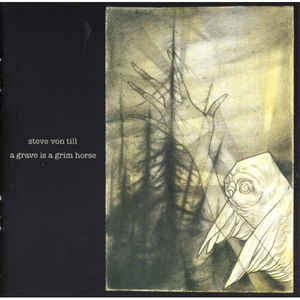
In a much gravellier, grittier vein, the song "Brigit's Cross" by Steve Von Till on his The Grave is a Grim Horse doesn't have a huge amount to do with Brigit but it does protest the primacy of the pre-Christian religion. I liked it. Here is a link to a YouTube rendering, and below are the lyrics. It, too, is $0.99 on iTunes.

Enjoy!


Steve Von Till – Brigit's Cross

Holy man,
Don’t waste your breath on me
I don’t seek what you lost
We don’t need your superstition

Keep your poison out of our well
It’s bitter to the taste
We’ve been drinkin’ here
For thousands of years

I left my blessing
On the Brigit’s cross

Our old ways are as snakes
That live deep in the clay
No man with a crooked stick
Can drive them away

He drove our gods into the sea
At least so they say
Let me tell you friend
We’ve given up your ghost

I left my blessing
On the Brigit’s cross

I live my days by the quartered wheel
Woven from the straw
Harvest gold
Reflects the sun

I left my blessing
On the Brigit’s cross


Engaged Brigidism


Apart from my devotion to Brigit and my interest in Irish mythology generally, I have a Buddhist practice in the tradition of Vietnamese Zen Master Thich Nhat Hanh. So I am well exposed to the idea of engaged Buddhism, a movement begun by our teacher and his student friends as they attempted to come to grips with living as monastics in a country at war in the 1960s.

To quote Wikipedia (and who better?)

Engaged Buddhism refers to Buddhists who are seeking ways to apply the insights from meditation practice and dharma teachings to situations of socialpolitical, environmental, and economic suffering and injustice

It has long struck me that the stories of Saint Brigit often have to do with defying injustice, particularly around marginalized people such as lepers, the poor, and the mentally ill, as well as the liberation of slaves and the protection of fugitives. If that is so, it seems we are invited to follow the lead of the Catholic Brigidine Sisters and bring elements of peaceful social justice into our practice as lay or NeoPagan Brigidines.

This has a broad scope, as broad as the aspects of both saint and goddesses Brigit. Various possibilities come to mind. Generosity, in terms of donation of time or money or skills, of caring listening to suffering people, come instantly to mind. I have recently looked into volunteering with refugees in response to the awful situation faced by such people in many countries. To me that can be seen as under the auspices of Brigit healer, or Brigit hospitaller, or even Brigit smith, as a means of strengthening the bonds of our community and our world.

In the name of Brigit poet I sent a small financial donation to Story Archaeology today. These women are tireless in their researches into Irish mythology, brilliant in their understanding, scintillating in insight, and entertaining to read on their website and listen to on their podcasts. They aren't getting paid for the bulk of their work, yet they are giving a gift of inestimable worth. I am grateful to have discovered them and grateful that I have the opportunity to help.

You can donate to them via this link. No amount is too small to let them know you appreciate their contribution.

I would be interested to hear of others' engaged Brigidine activities.


Saturday, January 28, 2017

“What the Goddess Brigit Means for Women and Men Today” (Excerpt from Course)


Genevieve of Goddess Ink excerpted a lesson from my course Discovering Brigit for her blog post last week. Here's the link, and here's a quote:

Why has the Goddess Brigit become so popular, and with so many different kinds of people?
Apart from a lull in her popularity in the last century*, Brigit has always been beloved, especially among the Irish and Scots—and where they have migrated churches bearing the name “Saint Brigit’s” or “Saint Bride’s” have popped up with great regularity. So many Irish girls were baptized with her name that its diminutive—Biddy—came to apply to Irish women generally (not in the most flattering way, at all times, but that’s another story), just as their men became known as Paddies, after Saint Patrick.
Brigit’s fortune seems ever on the rise... 

Monday, January 23, 2017

Friends of Bride's Mound: Gathering, Archaeology, Hedge-Laying


C/O Glastonbury Opportunities, Unit 7 Abbey Mews, BA6 9DY.
Email; friendsofbridesnew@yahoo.co.uk 

January 2017 Newsletter

IMBOLC – Wednesday 1st February 2017 
The Friends of Brides Mound invite you to join us for the day, the feast day of St. Brigid. 

9.30am White Spring opens (tbc)
 10am Ceremony at the White Spring (tbc)
12 noon Meditation at the Well Head at Chalice Well
10.00 – 1.00pm Refreshments available at Chalice Well

1pm Walk to Bride's Mound with Serena Roney-Dougal; 
Meet outside the White Spring, where the White and the Red springs join.
Wear clothing and footwear suitable for wet and muddy conditions! 
2.30pm Gathering around the fire on Bride's Mound.

AGM.  The Library of Avalon, Glastonbury 22nd March from 7.30pm to 9.30pm.  All welcome.

Archaeology on the Mound 
Somerset skeletons are oldest evidence of monks found in UK

As you might have seen on the national news, Richard Brunning of Southwest Heritage Trust led a team doing the first archaeological dig on the mound since Philip Rahtz’s dig in the 1960s. All very exciting!

An ADF Imbolc Ritual


I realized today that I have not offered here any actual ritual for Imbolc, or indeed for flame-keeping, and that doing so might be of help to some readers. After poking around in my computer I further realized that it has been so long since I have felt the need to write out my rituals ahead of time (I've found over time I'm happier keeping it direct and simple), I don't have any to hand.

So I went noodling around on the internet and found this. It has many interesting ideas and although I would make changes if I were using it (such as not using the word invoke, as I don't feel I have the power or the cheek to summon a deity--invite, maybe), I think it is a great jumping off place. Kudoes to Rob and Kami for their work here.

A Solitary Imbolc Ritual

by Rob Henderson and Kami Landy
written March 31st, 1999
Adapted from the Shining Lakes Grove 1999 Imbolc Rite, written by the SLG Liturgists
with sections shamelessly stolen from the StoneCreed Grove Solitary Liturgy
(This is my first attempt at writing a solitary ADF ritual. Well, perhaps "writing" isn't the right word, more like "assembling". Our Grove's Imbolc Rite this year was more scripted than our usual fare, and I thought it would be a good opportunity to do a solitary ritual. I'm adding some running commentary in the parentheses, so you can understand not only what you're doing, but why you're doing it. -- Rob)
[Kami's commentary will be in brackets, like so.]
(If you've got your Dedicant's shrine set up, you should use that for this ritual. If you don't have such a shrine, you can make do with representations for the well (a bowl of water) with a piece of silver for the Well offering (a coin is fine), the fire (a candle - three candles, or a three-wicked candle, would be best), and the tree (a branch placed in a pot of soil is good). You'll also need:
  • a separate bowl of water and a candle (to receive the blessings of Brigit)
  • offerings for Brigit (see below for suggestions)
  • offerings for the Outsiders (food or drink)
  • For purifications: mud or red ochre; salt water; incense or smudge stick
  • a straw "dolly" or rowan stick to represent Brigit, and a straw bed for her (optional)
  • For the return blessing: red, white, and black ribbons attached to the frame of a doorway (optional)

Wednesday, January 18, 2017

St. Brigid's LGBTQ-Affirmative Christian Community

I was strolling down Burrard in downtown Vancouver a couple of weeks ago and as I passed Christchurch Cathedral I glanced at the schedule of events. To my great surprise there was a thing called "St. Brigid's Eucharist" on Sundays at 5:30 PM. Curious, I went online to find out more.

Here's what the St. Brigid's people say about themselves.


WELCOME!

Welcome to St. Brigids, a community of Christ-followers in downtown Vancouver. We are an emerging LGBTQ-affirming Christian congregation of Christ Church Cathedral where questions are honoured, faith is nurtured, and discipleship pursued.

St. Brigids is a community that loves to sing, laugh, eat, serve and worship God together in ways that send us refreshed and renewed into our daily lives – wherever that may take us.

If you are new to Vancouver, or are newly seeking a spiritual home, we invite you to join us for Sunday worship. We are a growing, newly formed congregation that welcomes people from diverse backgrounds.

Our hope is that you’ll be able to get to know us through the website and in person so you’ll have what you need in order to decide whether St. Brigids is a community where you can plant roots. You’re invited to get to know us in a way that makes the most sense to you:

We look forward to welcoming you to St. Brigids!

(So how cool is that? say I.)

Tuesday, January 17, 2017

Hymn to Saint Brigid


Philomena Breslin

I've found a lovely rendition (if you like "High Voice", which I do) of a hymn sung by many Irish schoolchildren in earlier times--twentieth century, and if I read things right, nineteenth century as well. (I wonder if it is ever sung in schools there now.) 

It is sung by Philomena Breslin on her album My Wild Irish Rose, and can be purchased on iTunes for $0.99 CDN (or similar in your local monetary dialect). You can preview the song to get the tune and see if you like it. This is (I blush to say) my very first purchase on iTunes. For a more folky version, turn to Michael Connolly on YouTube.

Called here "Hymn to Saint Brigid", the song is also known as "Far Above Enthroned in Glory", and was written by Brigidine Mother Cecilia Sinnott of Goresbridge, a village in County Kilkenny in northern Leinster. The Australian Sisters have the words on their site:


Hymn to St. Brigid

Words by Mother Cecilia, Brigidine Convent, Goresbridge. Circa 1911.
Music by Sinnott (1863-1902)
Music by M.S.
Far above enthroned in glory
Sweetest Saint of Erin’s Isle
See thy children kneel before thee
Turn on us a Mother’s smile.
Sancta Mater, hear our pleading
Faith and hope and holy love
Sweet St. Brigid, Spouse of Jesus,
Sent to us from Heaven above.
Sweet St. Brigid, Erin’s children,
Far and near o’er land and sea
In the world and in the cloister
Fondly turn with love to thee.
Sancta Mater, sooth the mourner
Shield the weary tempted soul
Sweet St. Brigid, guide thy children
To thy bright and happy home.

Marcella, of Trias Thaumaturga, offers the Irish language version of the text, collected by Douglas Hyde. She says of it, " I much prefer the Irish version as the lyrics don't convey the rather twee Victorian-parlour sentimentality of the English."

Twee or not, Philomena's singing and the familiar-sounding melody are pleasant to my old-fashioned ears. 

I am a tad puzzled by the dates given on the Sisters' site, though. If Mother Cecilia died in 1902, I am unsure how she could have written this in 1911. But Saint Brigit is known for her miracles. Maybe this is another such.


Sunday, December 18, 2016

Amy Panetta: Brigit Classes, Updates, and the Fundraiser is Ending In Five Days!


Amy has been raising money to finance a research project in Ireland, which I posted about last month. She has been sending out updates and brewing all sorts of ideas. I thought I would share her latest (and last?) letter with you below. Of particular interest, perhaps, to those of you in the eastern United States, who might be able to attend her classes, but there is much more besides.

From her bio:

Amy Panetta, MA has been teaching music for over a decade in public schools, independent schools (including Montessori, Waldorf, and college preparatory), music studios in Northern New Jersey and the Central Vermont/Burlington areas.  She has experience facilitating West African and Caribbean drumming classes for adults and children in grades 1-12, as well as arranging percussion music for local high school productions.  Other related community involvement includes empowering teenagers in her previous role as Youth Program Coordinator at a Northern New Jersey Unitarian church.  Currently, Amy facilitates WorldSpirit Drum & Song sessions, leads classes discussing the music of Brigid, the pre-Christian goddess and Irish saint, and teaches a variety of private and group music lessons.
Amy holds a Masters of Arts in Ethnomusicology from the Irish World Academy of Music and Dance at the University of Limerick where she spent time studying the dynamics of an on-campus Irish traditional music session; investigating songs written in dedication to Robert Emmet, an Irish hero; formation of community drumming groups; and sacred music written in dedication to Brigid, the pre-Christian goddess and Irish saint.  She has been active in NJ, NY, and MA since 2007 participating in drum circles and classes.  She has studied and been influenced by Marafanyi Percussion, Sanga-of-the-Valley, Mark Wood, Aimee Gelinas, the late Frisner Augustin, and John Bowker in Ireland.  Her related interests include work in the Positive Discipline program for teaching social and life skills, Compassionate/Non-Violent Communication, peace education, progressive/holistic teaching approaches, instructing a special needs population, and integrating spirituality and music.


Message body
Hello all!

I hope you are all doing well and having a good time getting ready for holiday festivities.  I certainly wish you and your loved ones the warmest holiday season!  

As you know, I started the fundraiser Music of Brigid, Ireland's Patroness back on November 1st (All Souls Day).  This fundraiser drive will end on December 21st - that's only five days away.  If you are feeling generous and would like to support this project, now is a great time to do it!  Just over 20% has been raised.  Thank you all who have contributed!  While the drive will formally end on December 21st, contributions can still be accepted afterwards (if you have any problem with this on the webpage, you can email me for my postal address).

I am happy to announce that I will be teaching several classes coming up in the new year discussing the Music of Brigid, which will include:

  • Who the historical Brigid was, both the saint and pre-Christian goddess.
  • The traditions in Ireland on St Brigid's Feast Day/Imbolc.
  • Weaving Brigid's crosses.
  • The nature of the songs dedicated to Brigid and where they are performed.
  • Hearing a selection of songs that people have recently composed.
  • Learning a song dedicated to Brigid in Irish Gaelic.  (All musical skills are welcome!)

Dates and Locations:

1/12/2017: AwenTree in Easthampton, MA
1/18/2017: Upstairs above the Grian Herbs Apothocary in Montpelier, VT
1/19/2017: Spirit Dancer in Burlington, VT
1/21/2017: Mystic Spirit in Montclair, NJ

You can find out complete information about these classes on my website.  More classes are being added soon.
I am excited that some other opportunities are brewing, such as being a guest lecturer for high school and college students in VT.  Also, I have been accepted to speak at the Celtic Studies Association of North America conference coming up in British Columbia!  

I should mention also, that to make my research more widely accessible, I have decided to start up a new podcast in January 2017!  I should be posting one episode each month with the composers of Brigid songs, as well as experts in disciplines such as Irish and Celtic studies, folklore, and ethnomusicology.  Yay!  

If you are interested in supporting my research project, as well as the contribution I will be giving to the Brigidine sisters in Kildare, Ireland, please visit the following webpage (that includes a short video and description):


I thank you very much for your generosity!  Please share this email with anyone who you think might be interested!

Beannacht,

Amy Panetta

Wednesday, November 23, 2016

Review by Morgan Daimler of Stepping Into Brigit (A Course by Mael Brigde)


I was delighted to discover this review on my Facebook feed today. Morgan Daimler (Pagan Portals: Brigid, among others) reviews the second of my online Brigit courses. (The first is Discovering Brigit. If you do that one, at the end you will find a coupon for Stepping Into Brigit which essentially reimburses $13 of the $15 you spent to take DB.)

This review is from Living LiminallyReflections on Reconstructionist Polytheism, devotion to the Déithe and an-déithe, and living Paganism in a modern world

Top of Form

Bottom of Form
TUESDAY, NOVEMBER 22, 2016
  Many people are familiar with my dedication to the Morrigan but what may not be as widely known is my love of Brighid. It is, by its nature, a different sort of love, but it is just as much a presence in my life in its own way. So when I was asked to help Beta test* a new course 'Stepping Into Brigit' designed for people interested in Brighid to learn about and connect to her I jumped at the chance.


The course is set up as an 11 module course, with each module containing multiple lessons, and is meant to be done - ideally - over a month. With roughly 38 overall lessons to complete (course surveys excluded) one would need to either decide to do one or more lessons a day or set aside time every few days to do a full module in order to finish in a month. What I liked about the set up though is the learning is self paced, so that you can choose to it at whatever speed you like and in whatever fashion works best for you. I took the 'chunky' approach myself and did a full module at a go because that was what worked best with my schedule, although other people may find a slower spacing better.


Each lesson is fairly thorough but also brief. At some points I felt perhaps a bit too brief, but the idea was to take time with each one and contemplate it, write down thoughts and reflections on the material, and really process it, rather than rushing through to get to the next one. They often included outside recommended reading or references to follow up, such as the Story Archaeology's entry on discussing her which should take some time to do. With that in mind the size of each lesson is pretty good, and it really was designed to encourage engagement from the student. I also like the use of mixed media throughout the course which used text, images, videos, and audio clips.

The material looks at Brighid in a holistic manner including both the pagan Goddess as well as the Christian saint, and while I didn't feel the same engagement with the material relating to the saint that reflects more of my own bias than any flaw in the course. It certainly was the most well-rounded view I think I've seen and I can't fault it's fairness in giving an equal voice to all sides. the material is generally presented without any favoring of one opinion over another and with clear citation of sources, allowing a student to draw their own conclusions for the most part about the very complex subject of Brighid pagan roots and Christian history.

Speaking of sources, I really did like the way the course offered a lot of quotes directly from source material. I think often this is the best way to let a student contemplate the original material without the filter of an author's opinion. I also like the amount of poetry included and the way that allowed me, as a student, to experience the material without overthinking it and to appreciate the beauty of the ideas presented. I also liked the option of entering feedback after each lesson, to share personal experiences or thoughts. I did feel there was a lack of more directed exercises beyond the journaling being encouraged, but I acknowledge that not all students want to feel like they have written homework to complete. The overall feel of the course was contemplative and engaging without being tedious or excessively 'school-like' in its feel, which I think will have a wide appeal to modern adult spiritual seekers.

There are many people out there interested in Brighid and many seeking classes or courses online to help them better connect to spiritual things of interest. For those looking to learn about and connect to Brighid I think this course would be a good option, if you find that online courses are generally a good option for you. As with any such course it requires a person to be self-motivated to do the lessons, and to incorporate the material in a practical manner. However for someone who has the desire to truly make use of what this course is offering I think a great deal of valuable knowledge can be gained here.


*to be clear - I was asked to Beta test the course by its creator, but this review is being offered by me freely and without any compensation. As far as I am aware I was asked to help test the course in part because of the book I had written on Brighid and my knowledge of Her, and in the interest of transparency my book Pagan Portals Brigid is recommended reading for this course. However I would not and will not endorse nor recommend anything I do not genuinely see value in and my opinions offered here are honest; had I not seen value in the course on its own merits I would simply not have reviewed it. 
___________________________________________________

ABOUT Morgan
My name is Morgan Daimler. I have been a witch since 1991, an Irish reconstructionist since about 1994, and heathen since 2006; I also practice seidhr. I love studying other paths and other ways of doing things and I enjoy discussing religion, philosophy and spirituality with people from diverse paths. I am a Druid in the CR Druid group the Order of the White Oak, as well as a member of ADF. I try to stay active in the pagan community and am always interested in hearing about how other people are doing things. I have had my poetry and prose published in different places including eight anthologies, Circle magazine, as well as Witches and Pagans magazine. I am the author of the book By Land, Sea, and Sky, the children's book a Child's Eye View of the Fairy Faith which is published through Spero Publishing, and through Moon Books: Where the Hawthorn Grows, Fairy Witchcraft, Pagan Portals: the Morrigan, Pagan Portals: Irish Paganism, and the forthcoming Pagan Portals: Brigid. I also have a self published urban fantasy/paranormal romance series, Between the Worlds.


Sunday, November 13, 2016

“Là Fhèill Brìghde”, by Annie Loughlin


Tairis

Check out Annie Loughlin's article “Là Fhèill Brìghde” on her site Tairis: A Gaelic Polytheist Website.

Annie is a careful researcher and clear writer, who, bless her heart, graces her site with footnotes. She is also writing from a Scottish perspective, though of course she covers the Irish material as well.

I'll tantalize you with her opening:

Throughout the Gaelic world Brìde is one of the most popular saints, and is commonly known as the foster-mother of Christ and midwife of Mary. An apocryphal tale tells of how Brìde was in Bethlehem at the time of Christ’s birth. She answered a knock on the door and found Mary and Joseph looking for a place to stay, but was forced to turn them away. Before they left, however, she gave them water and some of her own bannock, seeing that they had had a long journey. Once they had left, Brìde turned round to find the bannock miraculously whole and the stoup of water full again. Knowing something out of the ordinary was happening, Brìde went looking for the couple and, seeing a strange star in the sky, followed it and found them in the stable, where Mary was about to give birth. Full of compassion, Brìde went to Mary’s aid and helped deliver her child.1
It is because of the events in this tale that Brìde is given the day before Candlemas as her own festival. Candlemas celebrates the ritual purification of Mary after giving birth, since Mary was said to be so grateful to her for her help. In parts of Ireland, it is said that Brìde helped distract the crowd present when Mary brought Jesus to the temple by parading ahead of Mary wearing a headdress of lighted candles, and it was because of this that Mary decreed that Bride should have a festival dedicated to her on the day before Mary’s own.2
There is often some confusion over the dating of Là Fhèill Brìghde, which is often given the same date as the Christian festival of Candlemas, on February 2. However, bearing in mind the tradition of Brìde being Mary’s midwife, Là Fhèill Brìghde actually falls on February 1 (or February 13, Old Style) the day before Candlemas. Candlemas and Là Fhèill Brìghde are therefore not the same festivals.
Now! Off with you to her website to read the full text.